Self-Preservation for the Communication Professional – Insight from the Frontlines

Self-Preservation for the Communication Professional – Insight from the Frontlines

During COVID-19, communication professionals, worldwide, are working around the clock to gather, verify, and distribute critical information to their internal and external stakeholders. We are so busy gathering data that sometimes we overlook our personal and psychological needs. Recognizing the signs of psychological fatigue and reducing stress are important for the long-term well-being of a communication professional.

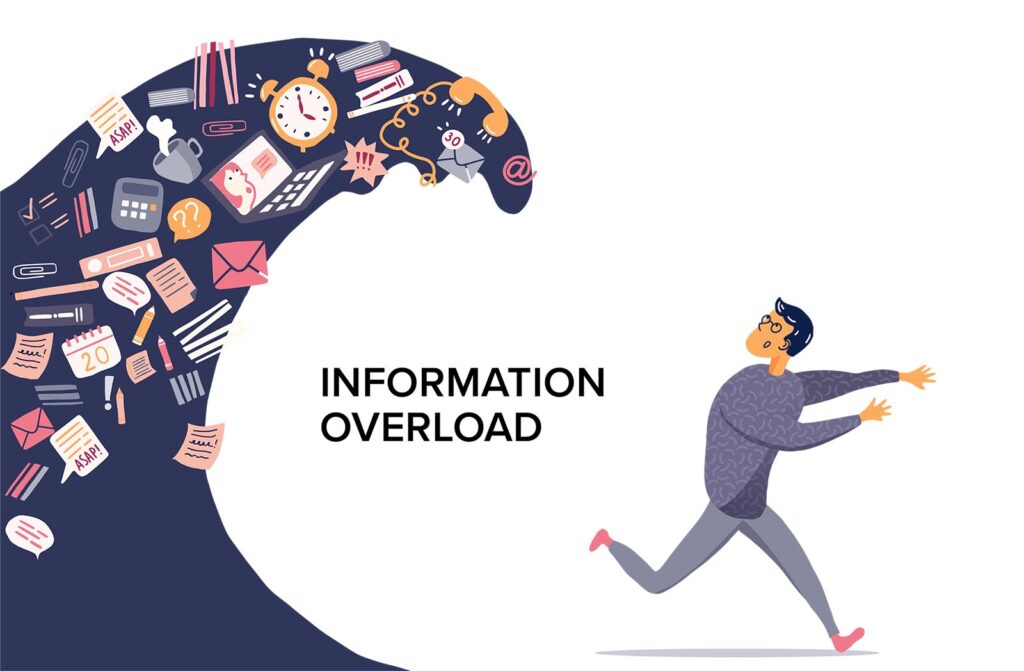
cartoon man running from information overload

With ever-changing information, the rapid growth and presence of social media platforms, and the public’s appetite for instantaneous information, the communication professional’s role becomes more complicated and stressful which places undue pressures on our psychological health. As with our stakeholders, psychological considerations can have tremendous impact on how we process information ourselves. We juggle issues such as message structuring, timeliness, accuracy, relevance, and delivery mechanisms to meet the informational needs of our stakeholders. However, we need recognize the importance of addressing and reducing our own psychological needs to remain an effective communicator. Addressing psychological impacts may require greater resources and manpower that may be in short supply or even nonexistent.

Recognize and Overcome

cartoon images speaking to one another

It’s important to recognize common reactions such as sadness, anger, fear, difficulty sleeping, or impaired ability to concentrate. To overcome some of this anxiety, consider integrating some of the following into your routine:

  1. Impose a self-regulated “time-out” every two hours. Walk away from the action (i.e., down the hall, outside for a breath of fresh air, a cup of coffee, water break, etc.)
  2. Walk around the building to clear your mind, perform simple exercises such as stretching, chair squats, wall push-ups, etc.
  3. Employ a sense of humor with family, friends, and colleagues. Even in crisis situations, lighthearted moments occur.  Don’t be afraid to capitalize on this opportunity.  Laughter boosts the immune system, decreases stress levels, lowers blood pressure, and can relax your muscles for up to 45 minutes.

Develop a Strategy

cartoon images developing a strategy on a calender

Ask yourself the following questions when developing communication strategies:

  1. Can you overcome the effects of your own mental noise as you develop communication strategies?
  2. Will internal and external stakeholders trust you, your messaging, and your delivery mechanism?
  3. How do/will you respond to internal and external frustration and outrage factors?
  4. Can you rise above self-doubts, distorted communication, and outside influences to deliver a successful crisis communication strategy?

Early Detection

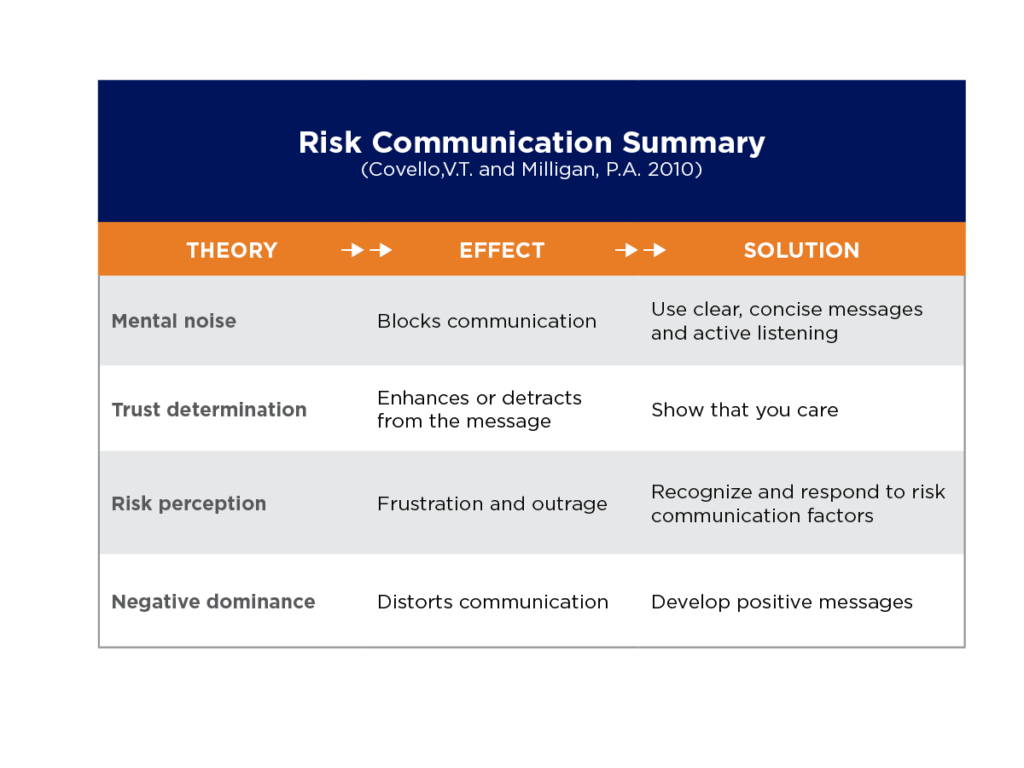
Early detection of psychological stressors and developing coping mechanisms will help all of us as we continue our goal of providing important information to our stakeholders. If you are feeling these stressors and you have access to “inside” information, think about your stakeholders’ perspective, lack of information, and how their stress levels may be increasing. Remember, science and research have shown us these are all normal feelings and emotions. For example, research by renowned social scientists and risk and crisis communications experts such as Dr. Vincent Covello provide a wealth of knowledge for honing and applying best practices in the communications work we do. A few important principles and concepts to integrate into your communications strategies are listed below:

Chart depicting Risk Communication Summary

Mental Noise – everyone suffers from mental noise
Example: personal/professional issues, looming deadlines, patient issues, etc.

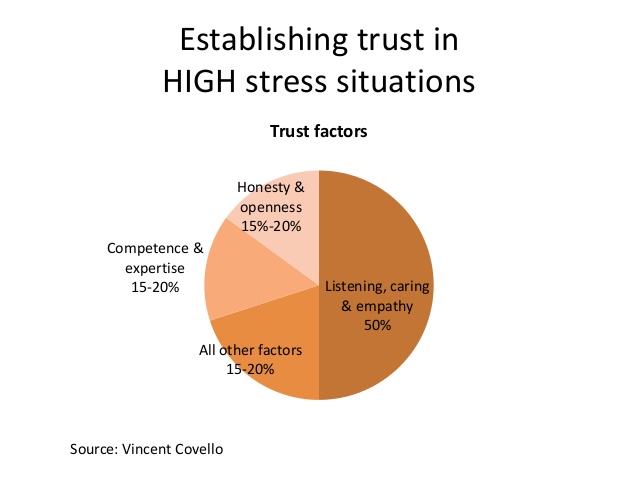
Trust determination – demonstrated in verbal and non-verbal communication:

  1. Empathy/caring
  2. Competence/expertise
  3. Commitment/dedication
  4. Honesty/openness

pie chart for establishing trust in high stress situation

Negative dominance is based on previous experiences, hearsay, negative images, rumors/misinformation, words, etc.

Note: Negative experiences, words, or actions are usually embedded and remembered more than positive experiences/messages. Create as many positive messages and images as possible to counteract negatives.

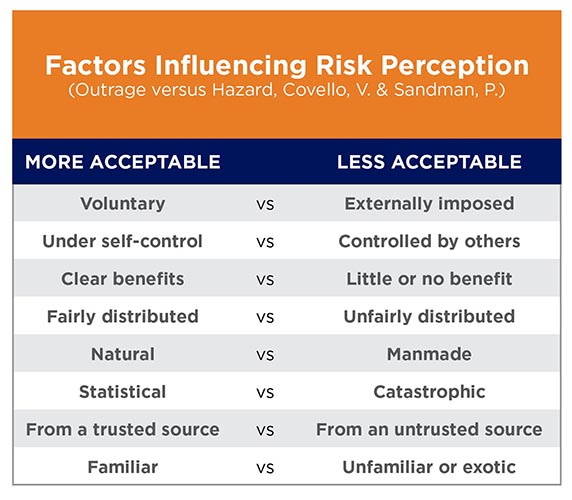
Risk perception – what are the risks associated with the incident of concern?  Are those perceptions-based factors such as personal experiences, hearsay, rumor/misinformation, etc.?

Chart of factors influencing risk perception

During your COVID-19 response activities remember there is a “me” in “team!” Hopefully, understanding the importance of “me” will help you and your teams maximize your strengths, grab the attention of your stakeholders, and lead to a cohesive communication response. For “me,” I am following the advice I teach in my risk and crisis communication training, by developing a three-part action plan;

  1. What should be done?
  2. What can be done?
  3. What must be done? Developing and operationalizing your own personal action plan can help reduce stress levels, provide clearer direction, and boost your self-confidence.

If you’d like additional information on SummitET’s strategic communication assessment, planning, training, and exercise support capabilities, please contact info@summitet.com.

The Benefits of Crisis Communications Skills

Benefits of Enhanced Crisis Communication Skills

Enhanced crisis communication skills help organizations meet the growing demands for information related to an emergency event. Learn all the benefits.
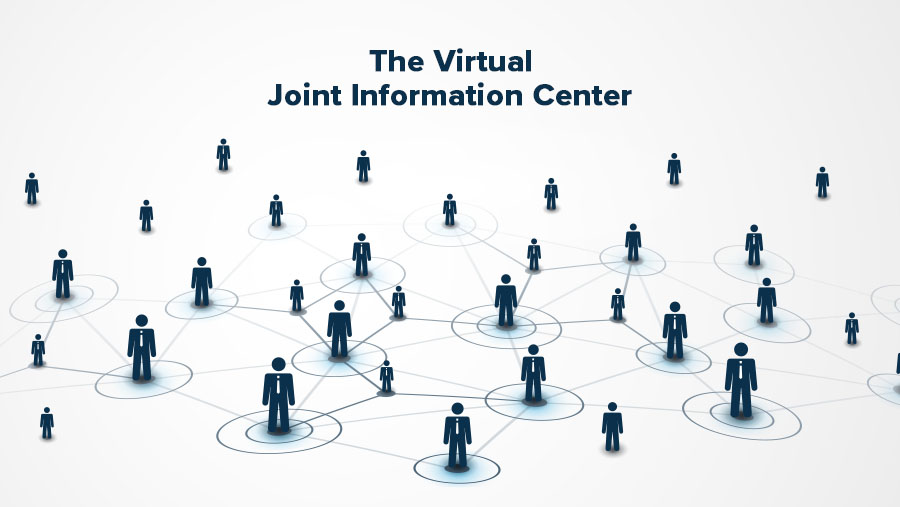
Virtual joint information system graphic

What is the Virtual Joint Information System (JIS) / Joint Information Center (JIC)

What is the virtual joint information system (JIS) and Join information Center (JIC) and the benefits of communicating digitally?

Seven Benefits of Native Social Media Drills and Exercises

We have identified seven benefits of using native social media accounts to conduct crisis communications drills and exercises.

remote employee working on laptop from alternate location

Combating Cyber Threats in Telework Environments

With many industries quickly shifting to telework, cyber-threat actors are taking advantage of new vulnerabilities to cyber systems. Learn to reduce these threats.

Identifying and Addressing Misinformation and Combating Disinformation on Social Media: The Viral Spread of Coronavirus

Identifying and Addressing Misinformation and Combating Disinformation on Social Media: The Viral Spread of Coronavirus

The beginning of 2020 brought a heightened sense of health preparedness and focus on the importance of identifying misinformation and combating disinformation on social media. Misinformation is defined as inaccuracies stemming from an error in information gathering or reporting, while disinformation is intentionally fabricating false information to shape a point of view or a story. Distinguishing between misinformation, disinformation, and credible information is critical to stakeholder understanding regarding the impact of the Coronavirus (a.k.a. #2019nCoV). While a majority of information seekers may not be impacted by #2019nCoV, learning how to recognize reliable information sources during this outbreak or any other crisis event is important.   

On January 30, 2020, the World Health Organization declared the #coronavirus outbreak a global emergency. As confirmed #2019nCoV cases are reported, and increased loss of life continues to make headlines, information about the health crisis has overtaken digital and social media.

Social Media Impact

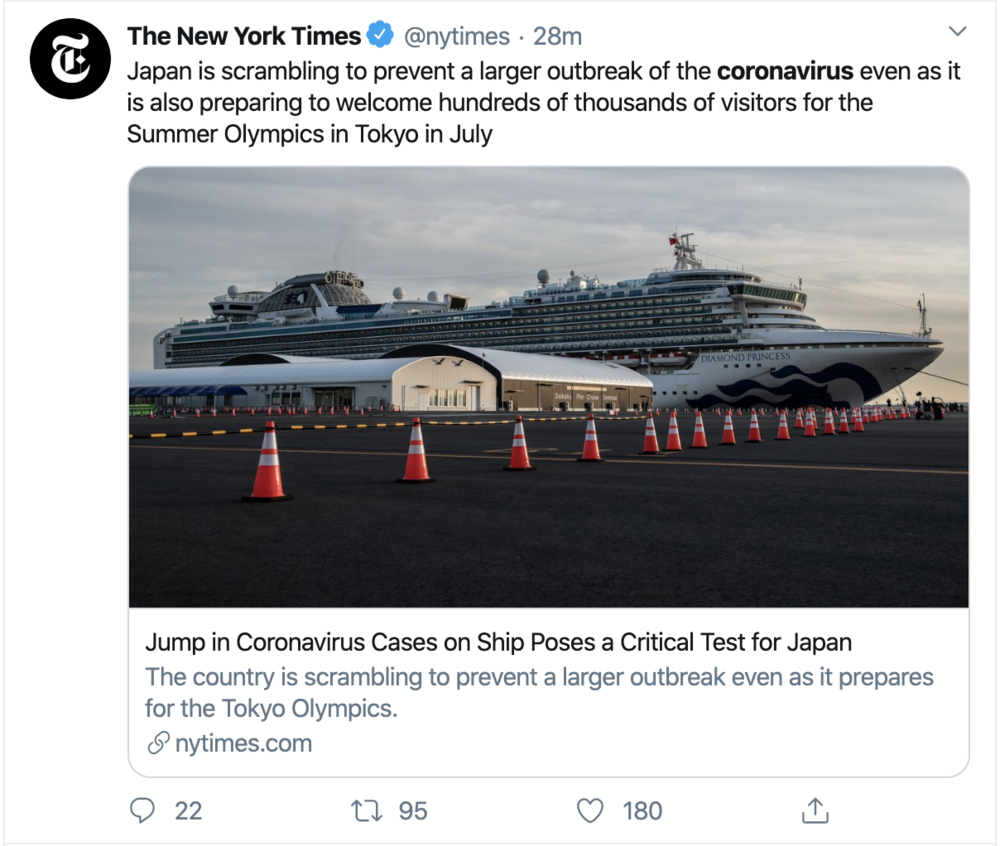
According to Twitter, as of January 30, 2020, there have been over 15 million tweets on the topic. The spread of misinformation and disinformation is so prolific that big tech is actively trying to combat its voracity.

For example, Facebook is giving ad credits to the World Health Organization and Philippines Department of Health to share information and is also modifying its algorithm when users search for terms related to the outbreak.

YouTube is returning text results when users search for “coronavirus” and other terms related to the outbreak and is also pointing to authoritative video results.

Google is changing its algorithm to point users to verified information sources in search results and indicating when information has been fact-checked. Likewise, Twitter has modified its search results to point to authoritative, local-language information when people search for related terms.

Addressing Misinformation/Disinformation

The viral spread of misinformation and disinformation related to the outbreak also prompted the World Health Organization’s Director to specifically address the impact of rumors and misinformation.

According to the World Health Organization’s Director, Dr. Tedros Ghebreyesus, we must:

  • “accelerate the development of vaccines, therapeutics & diagnostics.
  • combat the spread of rumours & misinformation.
  • review preparedness plans, identify gaps & evaluate the resources needed to identify, isolate & care for cases, & prevent transmission.
  • share data, knowledge & experience with WHO & the world.”

The Department of Homeland Security Science and Technology Directorate’s 2018 publication on Countering False Information on Social Media in Disasters and Emergencies found social media information is typically shared with good intent. Researchers identified different characteristics of social media posts that lead information consumers to believe alternative behavior such as those which intentionally propagate malicious agendas with incorrect information include intentional versus unintentional; insufficient information; opportunist disinformation; and outdated information.

Taking Action

If organizations do not take the initiative to develop a foundation of trust and authenticity with stakeholders before a crisis, stakeholders will look to unofficial sources.  Likewise, if social media information is not monitored and not corrected in a timely manner, rumors, as well as misinformation and disinformation will run rampant.

The scientific adage that nature abhors a vacuum also pertains to the flow of information during a crisis – even if that information is inaccurate or misleading. If we have learned anything from the #coronavirus outbreak, it is professional communicators must adapt their communication methods to combat the viral spread of misinformation and disinformation on social media.

Read more about how SummitET® is addressing this issue with agency and private organizations. Or, see our workshop on Addressing Misinformation and Disinformation on Social Media.

You can learn more facts about the Corona Virus here.

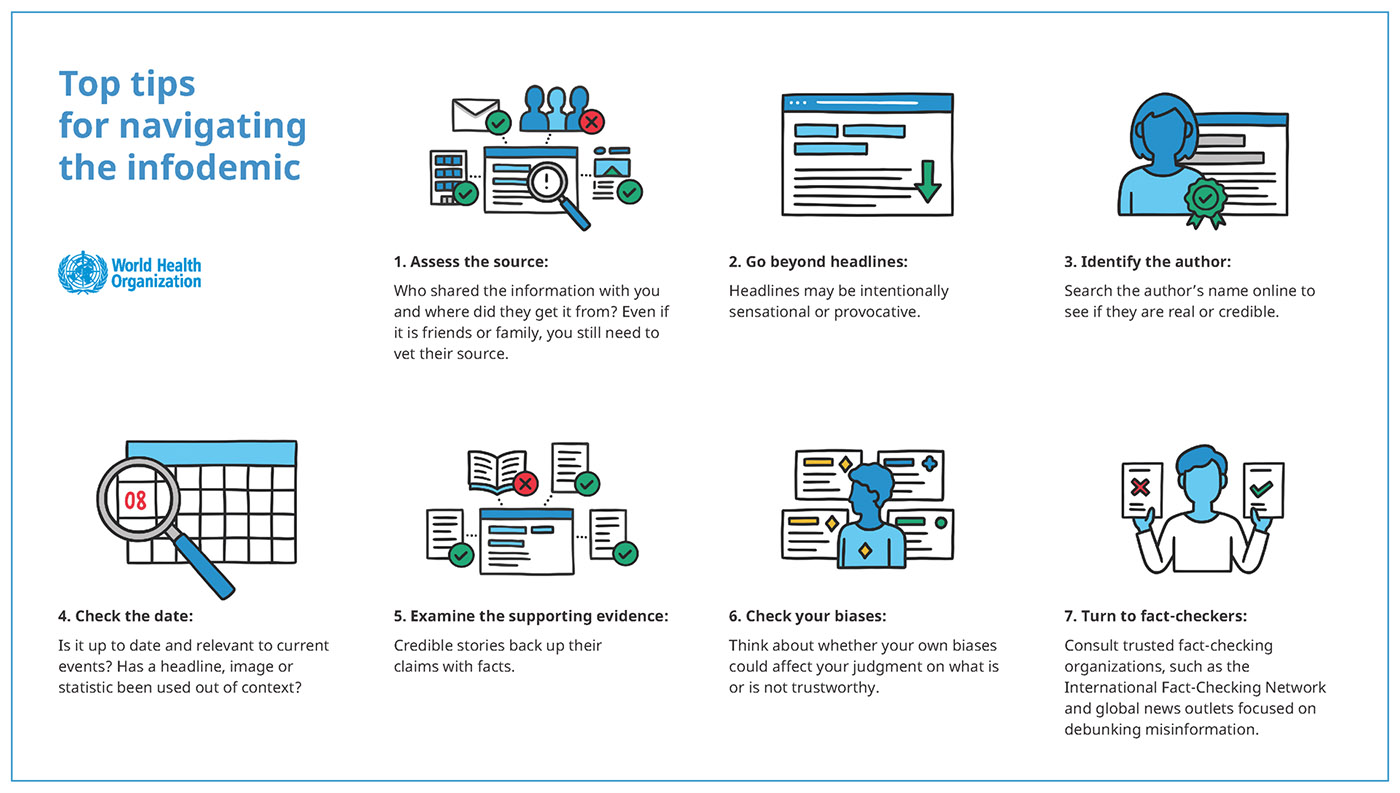
World Health Organization Top tips for navigating the infodemic

No Results Found

The page you requested could not be found. Try refining your search, or use the navigation above to locate the post.


Communicating Technical Information to a Non-technical Audience

Communicating Technical Information to a Non-technical Audience

In my 30+ year career, I’ve been fortunate to be able contribute in some small way to some world class organizations. I’ve come to realize that my biggest challenges haven’t been the technical aspects, but the communication aspects of health physics and radiation safety. Here are some thoughts for those tasked with communicating technical information to a non-technical audience.

Energy deposition into soft tissue due to low energy photons may result in a biological insult with ramifications affecting… Wait a minute! What?!?! Does anyone really like sitting through a technical lecture about something they may not already be somewhat familiar with?

Okay, admittedly, some people probably do. However, I venture to say that most don’t…especially when all you’re really looking for is a little useful information. I’d rather not spend half my time simply trying to decipher the big words the intelligent person in front of me is using and missing the real message. I get it…you’re smart. Now, teach me something and help me to understand the topic. Health physicists (radiation safety professionals), medical physicists, or others knowledgeable about ionizing radiation and its effects oftentimes think they are doing a good job at communicating what they are trying to say, but are they?
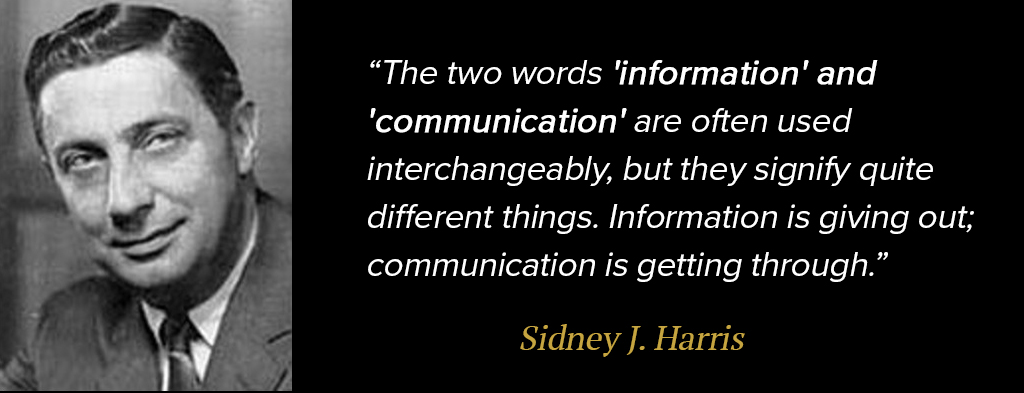
"The two words information and communication are often used interchangeably, but they signify quite different things." -Sidney Harris

I refer to a quote I’ve often seen attributed to Sidney J. Harris: “The two words ‘information’ and ‘communication’ are often used interchangeably, but they signify quite different things. Information is giving out; communication is getting through.”

My father used to tell me to speak with people, don’t talk at them.

I think this is pretty good advice from both men. And I think they’re saying the same thing. When trying to communicate complicated topics one must know the audience to whom they’re speaking, whether it’s an individual or a group of people, and what they expect or need. Is it an academic environment? Is it a stressful situation such as an emergency or an attempt to explain a medical procedure involving radioactive materials? Is it an individual who just wants to learn a little more about a topic? There are many things to take into account.

I come from a radiological background, but I think some things apply to most anyone trying to effectively communicate technical information.

Things to Consider

Here are some things I consider when delivering a presentation or simply answering a technical question with a non-technical audience.
  1. Decide what it is you really want/need to convey.
  2. Determine who it is that you are trying to reach and what they are wanting.
  3. Are there analogies that can be used to simplify the message while still delivering the information? Having multiple analogies ready may be useful.
  4. Is it necessary to be 100% correct (precise) when being 90% correct may simplify things and be a better way to get the true message across?
  5. Be prepared for a “heckler” to point out what you missed if you go the 90% route. That said, is this “expert” really who you are trying to reach?
  6. Watch audience response (body language, attentiveness, etc.) to help judge if your message is getting across.
  7. Don’t open a can of worms you’re not willing/able to deal with, and stick to your area of expertise.
  8. Be prepared for questions out of left field.
  9. Be yourself.
  10. Practice – try your message out on your neighbor, spouse, or another non-expert.
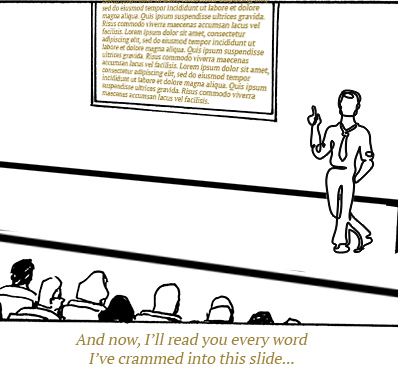
  11. No need to cram every piece of information onto your presentation slides.
  12. Use relatable visual aids
  13. Solicit feedback and use it to improve for your next opportunity. 


If you are a technical expert, your words have meaning. However, if nobody understands what you just said, why bother saying it? It takes effort, but becoming a good communicator of technical material has value…both to you and your audience.

Steve Sugarman, MS, CHP
Vice President and Corporate Health Physicist
Summit Exercises and Training LLC (SummitET®)

The Benefits of Crisis Communications Skills

Benefits of Enhanced Crisis Communication Skills

Enhanced crisis communication skills help organizations meet the growing demands for information related to an emergency event. Learn all the benefits.

Virtual joint information system graphic

What is the Virtual Joint Information System (JIS) / Joint Information Center (JIC)

What is the virtual joint information system (JIS) and Join information Center (JIC) and the benefits of communicating digitally?

Seven Benefits of Native Social Media Drills and Exercises

We have identified seven benefits of using native social media accounts to conduct crisis communications drills and exercises.

remote employee working on laptop from alternate location

Combating Cyber Threats in Telework Environments

With many industries quickly shifting to telework, cyber-threat actors are taking advantage of new vulnerabilities to cyber systems. Learn to reduce these threats.

Natural Disasters Take a Toll on the US Economy: and it’s Only Getting Worse

Natural Disasters Take a Toll on the US Economy: and it’s Only Getting Worse

Preparedness Is the Price of Authority

State leaders face growing emergency management authority as federal oversight shifts. Learn why readiness, coordination, and exercise validation are now essential.

What the FEMA Review Council Report Means for Governors and State EMAs

Explore how emergency managers and state leaders can strengthen operational readiness, leadership, and risk reduction as FEMA prepares to transition responsibility.

Counterproliferation: Safeguarding Against Radiological and Nuclear Threats

Effective counterproliferation is not just about preventing the illicit spread of these materials—it’s about ensuring the safety and security of communities worldwide.

Setting the Standard: Training, Strategic Guidance and Partnerships in Nuclear Emergency Readiness

How SummitET and NEST Raise the Bar for Radiological and Nuclear Incident Preparedness.

Bridging the Gap Episode 17: Empathy and Expertise: Communicating About Radiation Risk

In this episode of Bridging the Gap, Health Physicist Steve Sugarman speaks with host Mark Amann, a veteran strategic communicator, about the nuances and challenges of communicating about radiation in times of crisis.

Bridging the Gap Episode 16: The Evolution and Capabilities of Previstar®: A Journey Through Time

In this episode of Bridging the Gap, SummitET experts speak with Himadri Banerjee, Previstar® CPS™ developer and SummitET CTO, about the history and capabilities of Previstar, a software that has played a pivotal role in emergency and incident management for over two decades.

Bridging the Gap Episode 15: Japan and U.S. Experts Talk Disaster Management

In this episode of Bridging the Gap, SummitET had the honor of hosting a distinguished delegation of disaster management experts from Japan. This visit, ahead of the National Hurricane Conference, provided a unique opportunity to exchange ideas and share experiences in disaster management and preparedness.

Bridging the Gap IAEM Series – Episode 14: The Student Perspective on Emergency Management

In this special IAEM Conference Series episode of Bridging the Gap, SummitET podcast host and former emergency manager Ron Crane meets with Massachusetts Maritime Academy students about their experiences studying and interning in Emergency Management and their perceptions regarding challenges in the field.