At the 2025 National Homeland Security Conference in Washington, D.C., Corporate Health Physicist and SummitET VP Steve Sugarman shares his perspectives on radiological risk communication with Mark Amann, SummitET’s Chief Products Officer and a veteran strategic communicator. Their conversation illuminates the nuances and challenges of communicating about radiation, especially in times of crisis.

Communication for Understanding

Communicating about radiation risk presents unique challenges that extend beyond technical knowledge. A primary obstacle is overcoming deeply ingrained public perceptions of radiation—often shaped by popular culture and imagery—which can fuel widespread fear and misunderstanding. Addressing these anxieties requires communicators to engage with empathy, acknowledging emotions before presenting scientific information.

Translating technical language into clear, relatable terms is essential. Scientific jargon can lead to confusion, so the use of analogies and plain language enhances comprehension for diverse audiences, including emergency responders and the general public. Empathy as a foundation for communication makes listeners more receptive to accurate information and guidance.

Integrating Science and Strategic Communication

It is also important for strategic communicators and scientific experts to collaborate on messaging prior to emergencies. Developing clear, understandable, accurate messages in advance ensures effective dissemination of information when incidents occur. This preparedness benefits not only the public, but also first responders who rely on precise, timely details to make critical decisions under pressure. Unlike many hazards, radiation is easily detectable and manageable with appropriate training—an important fact that should be emphasized to alleviate unnecessary fears.

Empathy, Collaboration, and Clarity

In today’s complex media environment, misinformation can erode public trust. Empathy, transparency, and credible expertise are fundamental to building and maintaining confidence in official guidance. The podcast concludes with a candid reflection: although Sugarman specializes in radiation and health physics, his greatest concern lies with biological threats—reminding listeners that expertise and humility go hand in hand in the pursuit of public safety.
In summary, effective communication about radiological risk depends on empathy, collaboration, and clarity—principles that are vital across all domains of public safety and emergency management.

Meet the Experts Featured in This Podcast
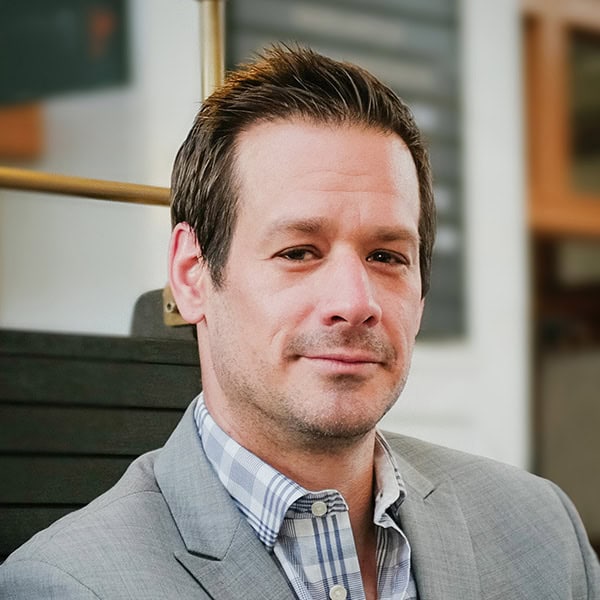
Mark Amann
Mark Amann

Chief Products Officer; Emergency Management SME
SummitET Bridging the Gap Podcast IAEM Series Kenn Honig

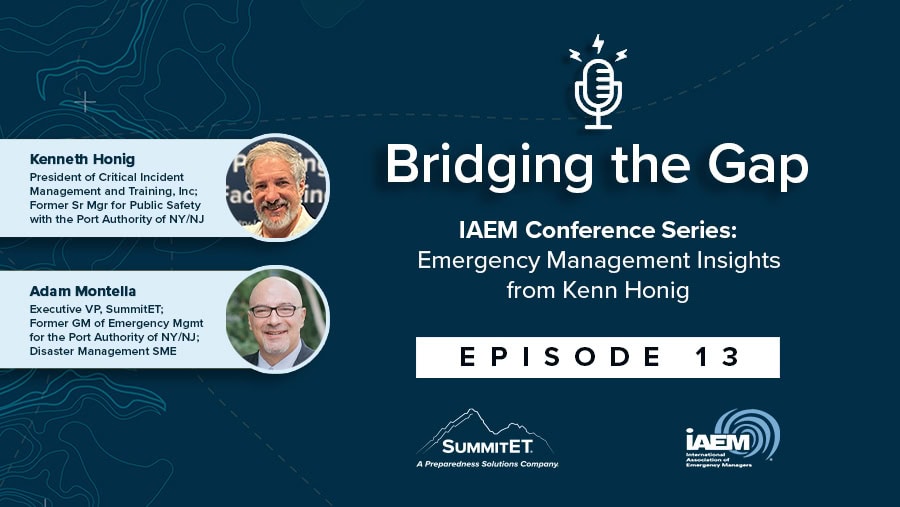
Bridging the Gap IAEM Series – Episode 13: Emergency Management Insights from Kenn Honig

In this special IAEM Conference Series episode of Bridging the Gap, SummitET host Adam Montella is joined by Kenn Honig, a seasoned emergency management consultant with a long career in law enforcement and emergency management at the Port Authority of New York and New Jersey. Join this insightful discussion as they navigate the evolution of emergency management practices, the technological advancements over the decades, and the undeniable importance of personal contacts in the field.

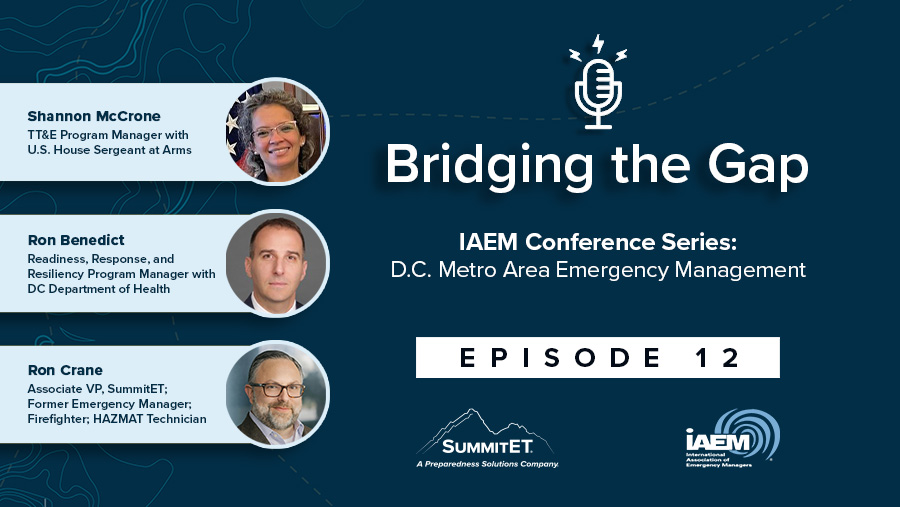
SummitET Bridging the Gap podcast IAEM series Episode 12 DC Metro Emergency Management

Bridging the Gap IAEM Series – Episode 12: D.C. Metro Area Emergency Management

In this special IAEM Conference Series episode of Bridging the Gap, Shannon McCrone, TT&E Program Manager with the U.S. House Sergeant at Arms and Ron Benedict, Readiness, Response and Resiliency Program Manager with DC Department of Health share their experiences, challenges, and ideas for improvement in emergency management in the DC metro area.

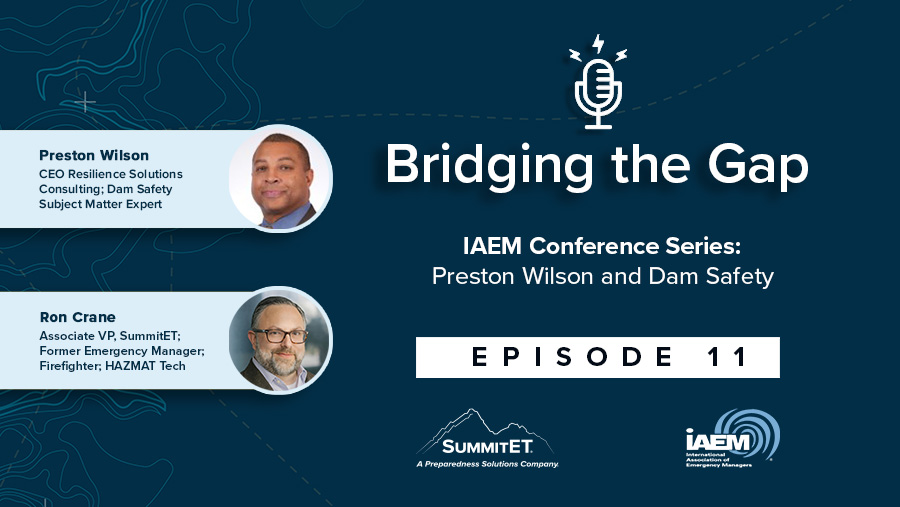
Bridging the Gap IAEM Series Podcast Episode 11 Preston Wilson and Dam Safety

Bridging the Gap IAEM Series – Episode 11: Preston Wilson and Dam Safety

In this special IAEM Conference Series episode of Bridging the Gap, host Ron Crane with SummitET is joined by Preston Wilson, CEO of Resilience Solutions Consulting. Prior to this role, Preston was the training manager for FEMA’s National Dam Safety Program, where he was responsible for developing and delivering training on emergency management and dam safety nationwide.

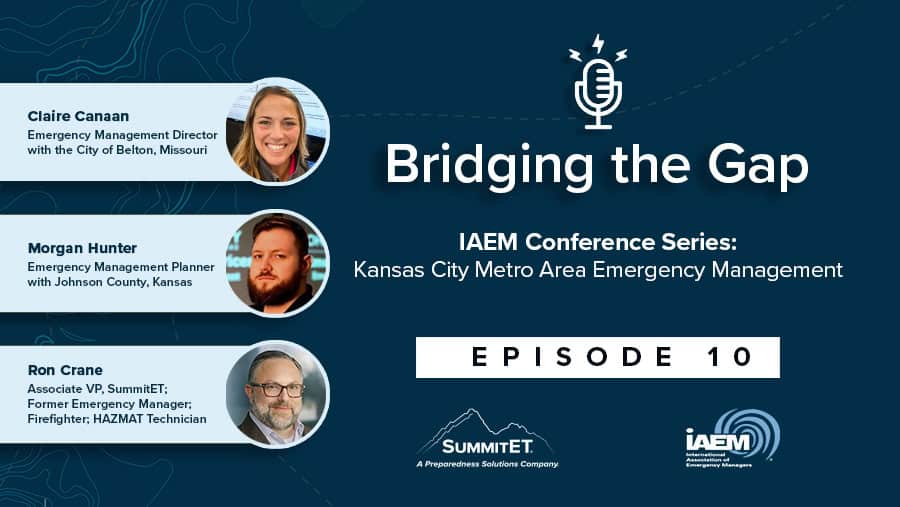
Bridging the Gap podcast, IAEM Series Episode 10: Kansas City Metro Area Emergency Management

Bridging the Gap IAEM Series – Episode 10: Kansas City Metro Area Emergency Management

In this IAEM Conference Series podcast episode of Bridging the Gap, SummitET host Ron Crane sits down with Claire Canaan and Morgan Hunter, emergency managers from the Kansas City metropolitan area. They discuss challenges in the EM field including staffing shortages and communication barriers, and the importance of embracing change and innovation.

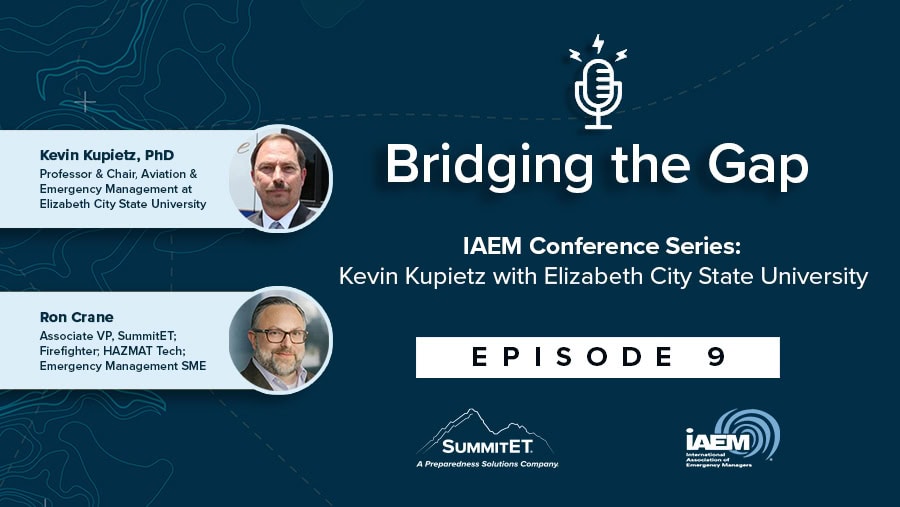
Bridging the Gap podcast graphic, IAEM Conference Series

Bridging the Gap IAEM Series – Episode 9: Kevin Kupietz with Elizabeth City State University

In this IAEM Conference Series podcast episode of Bridging the Gap, SummitET host Ron Crane discusses current challenges and opportunities in Emergency Management education with Elizabeth City State University Professor Kevin Kupietz, PhD.

SummitET Bridging the Gap podcast graphic

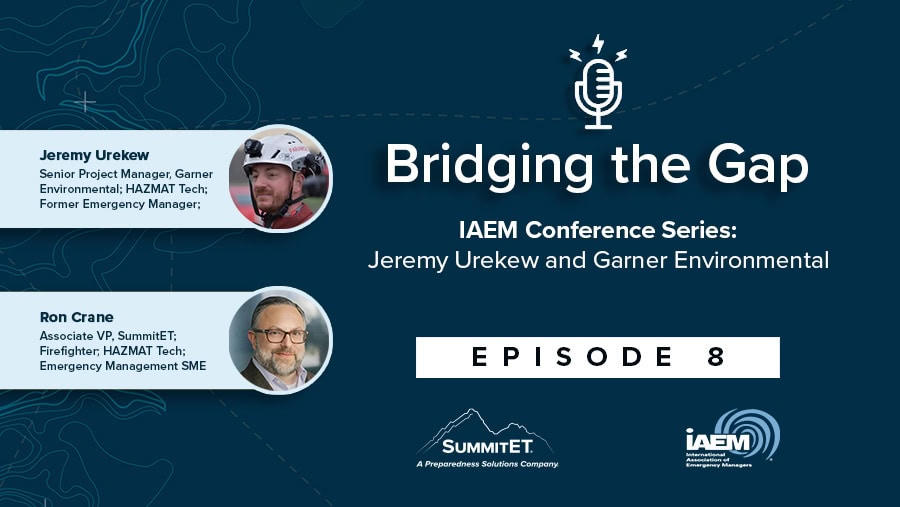
Bridging the Gap IAEM Series – Episode 8: Jeremy Urekew and Garner Environmental

In this IAEM Conference Series episode of SummitET’s podcast Bridging the Gap, Jeremy Urekew with Garner Environmental and Ron Crane of SummitET discuss ideas for improving challenges in the Emergency Management field. Jeremy has a background in emergency management, fire service, hazmat response, and counterterrorism work. With 25 years of experience in the public sector, he moved to the private sector by joining Garner Environmental Services, Inc., a disaster and emergency response company headquartered in Houston, TX.

Bridging the Gap preparedness podcast graphic

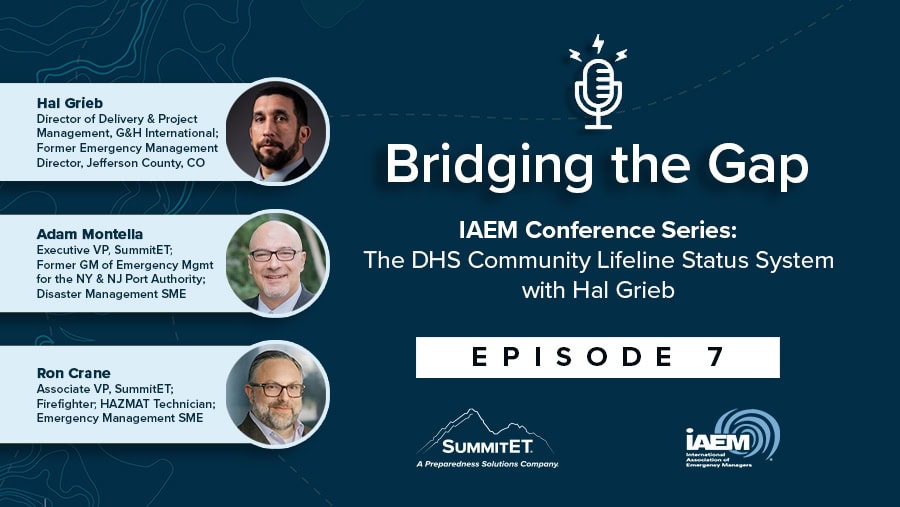
Bridging the Gap IAEM Series – Episode 7: The DHS Community Lifeline Status System with Hal Grieb

In this special IAEM Conference Series episode of Bridging the Gap, SummitET experts discuss the Community Lifeline Status System Project with Hal Grieb of G&H International Services. This software reporting tool is developed for the DHS to operationalize FEMA’s Community Lifelines construct and provides a data-driven framework to help emergency managers assess and report on critical services during disasters.