

Isotope Crossroads; DOE, NNSA, ORS, FBI

Isotope Crossroads; DOE, NNSA, ORS, FBI

Strengthening Integrated Response Through Custom Training Solutions 

Background 

The Office of Radiological Security (ORS), part of the Department of Energy (DOE) and United States Department of Energy/National Nuclear Security Administration (NNSA), is dedicated to improving the security of radioactive materials throughout the country. Recognizing the risks associated with transporting radioactive sources, ORS, in partnership with the Federal Bureau of Investigation (FBI) Weapons of Mass Destruction Directorate (WMDD) Nuclear and Radiological Countermeasures Unit (NRCU), developed the Isotope Crossroads tabletop exercise (TTX) series. This initiative brings together a diverse group of stakeholders, including law enforcement, emergency responders, regulators, public health professionals, and private industry representatives, to address critical security concerns in a collaborative setting. 

Mission Need 

Securing the transport of Category 1 and 2 radioactive materials is a vital national priority. These materials, routinely shipped across the United States, are vulnerable to potential threats that could have significant consequences for public safety and security. The need for a robust, integrated response to malevolent acts targeting these shipments prompted the creation of a specialized training exercise that could strengthen agency coordination and preparedness. 

Solution 

The Isotope Crossroads TTX series offers a custom-designed approach to training, tailored to the objectives of both sponsoring agencies and the specific needs of the host jurisdiction. Each exercise features a realistic, fictional threat scenario developed to challenge participants and promote active problem-solving. The collaborative format encourages team building and open information sharing in a “no-fault” atmosphere, allowing agencies to learn from each other and refine their response strategies without fear of criticism. 

Result 

Participating agencies reported significant improvements in team cohesion and communication. The tabletop exercise fostered an environment where local, state, and federal organizations could practice joint operations, identify areas for improvement, and build trust across disciplines. Enhanced information sharing and integrated response capabilities were direct outcomes, leading to a more unified approach to radiological security during transport. 

Conclusion 

The Isotope Crossroads TTX series, led by Sandia, has made a lasting impact on the agencies involved, strengthening the overall security posture for the transport of high-activity radioactive materials. Through its collaborative and customized design, the exercise has elevated preparedness and fostered enduring partnerships that support national safety and security objectives.

SummitET Presents Exercises and Training Support at I/ITSEC 2024

SummitET Presents Exercises and Training Support at I/ITSEC 2024

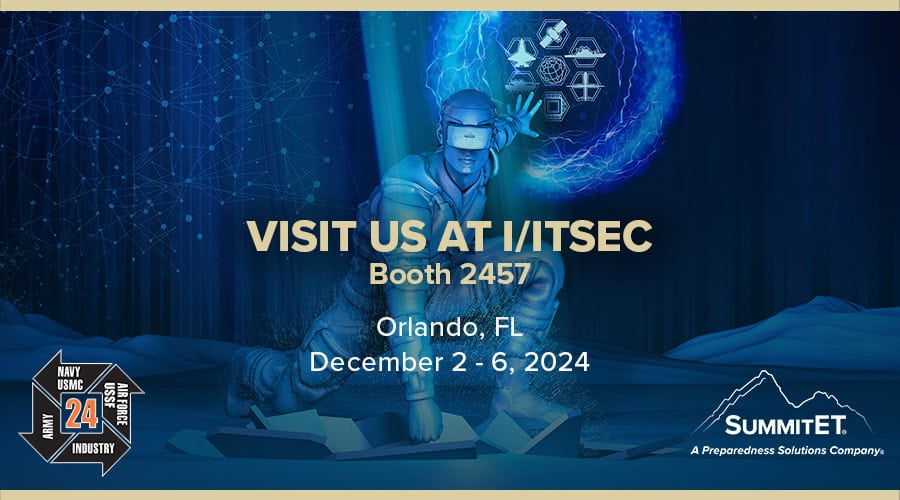
SummitET® is excited to present exercises and training capabilities at this year’s Interservice/Industry Training, Simulation, and Education Conference (I/ITSEC) in Orlando, Florida from December 2 to 6, 2024.

For almost 60 years, professionals in modeling, simulation, and training have gathered annually at I/ITSEC with a shared objective: to enhance the effectiveness of these disciplines in the world’s most complex environments. The 2024 conference theme Assuring Deterrence Through Integrated Training and Readiness – The Need is Now! “resonates not only throughout our military structure and operations, but through our allies and partners who, like us, are increasingly facing great challenges.”

SummitET has quickly grown its reputation as a leader in developing and supporting preparedness solutions that prioritize industry best practices and the latest developments in learning and technology. Drawing on their diversity of experience in emergency management and response, communications, and Chemical, Biological, Radiological, and Nuclear (CBRN) across military, government, and private sector applications, SummitET experts bring a comprehensive perspective to preparing for and managing a variety of risks. We provide solutions including full-scale field exercises, table-top exercises, plan development support, threat assessments, technical training and education, and beyond.

Schedule a Meeting

Use this calendar to schedule a meeting with our experts at I/ITSEC to discuss how we can support your trainings, simulations, planning, and more.

Training and Simulation Support:

CBRN Preparedness

Our preparedness capabilities include conducting threat assessments, developing response plans for potential threats, building training designed to mitigate the threats, and providing a suite of tailored workshops and exercises to test the readiness as well as providing the operational support an organization may require.

Strategic Communications Training

This includes comprehensive training in Joint Information System (JIS)/Joint Information Center (JIC) methodology and practices, risk and crisis communications, media relations, workshops, and exercises.

Social Media Simulation

Our training replicates real-world simulations conducted on closed native digital platforms to provide real-time, hands-on familiarity with social media tools and practices. 

Technical Consulting

Our diverse range of technical experts can support CBRNE effects modeling and simulation for realistic scenarios or augment exercises and training with technical support.

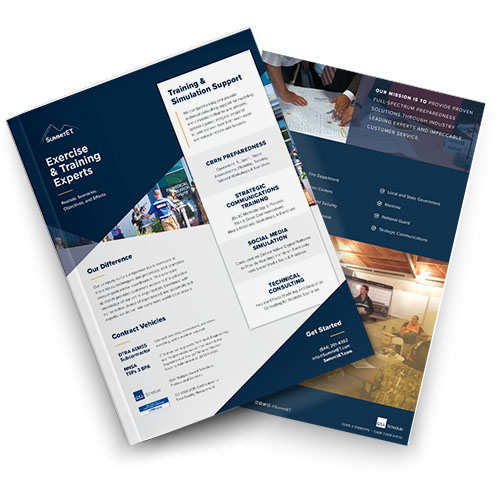
See our Exercise and Training Simulation Support Capabilities

SummitET IITSEC Exercise Capabilities

Contract Vehicles 

SummitET holds government contract vehicles that allow us to provide technical, programmatic, and business support services to federal and state/local agencies. Additionally, we are a subcontract team member for DTRA’s Assessment, Exercises, Modeling, and Simulation Support (AEMSS) multiple award contract.

Join the Workshop

SummitET experts Angela Leek, PhD, CHP and Jeff Skinner, MD will present a tutorial alongside colleague Nir Keren, PhD from Iowa State University:

Enhancing CBRN Response Readiness Using a Mental Model Matrix

Monday, December 2, 8:30-10:00am
Room 320F

Summary of Abstract:

Effectively addressing chemical, biological, radiological, and nuclear (CBRN) threats is crucial for military and emergency response teams, as these complex and rare incidents challenge responders’ preparedness. Traditional training often fails to capture the unpredictable nature of CBRN events, leading to gaps in responders’ mental models. This workshop presents an innovative approach that utilizes the Expected Mental Model State (EMMS) Diagnostic Matrix, an analytical tool designed to enhance cognitive strategies by aligning them with established military doctrines and emergency protocols. Participants will engage in discussions using case studies and data from practical exercises to identify gaps in mental models and refine training methodologies. By integrating military doctrine into the EMMS framework, the workshop aims to improve training resources and ensure that response teams are better equipped to handle the complexities of CBRN incidents.

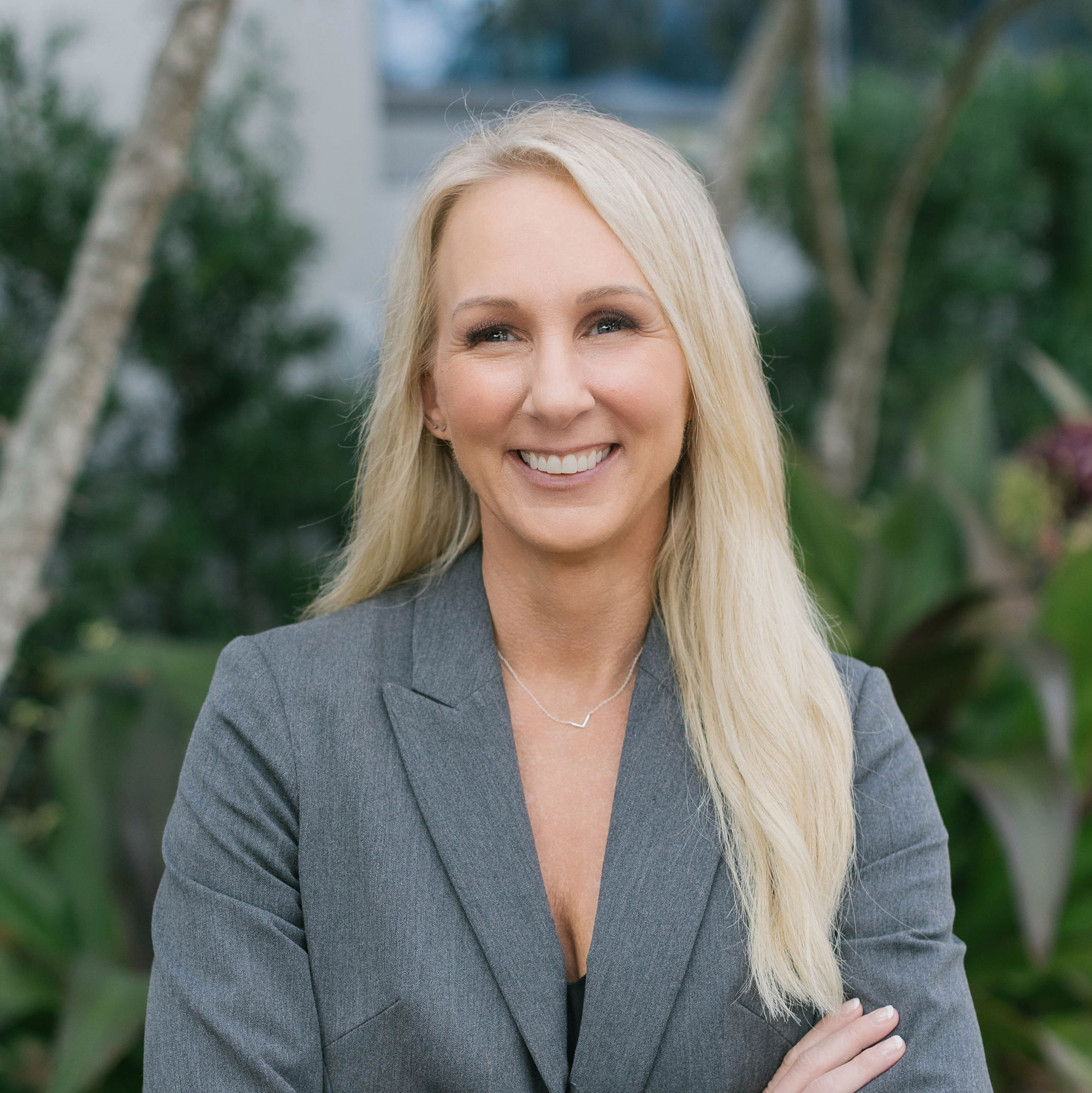
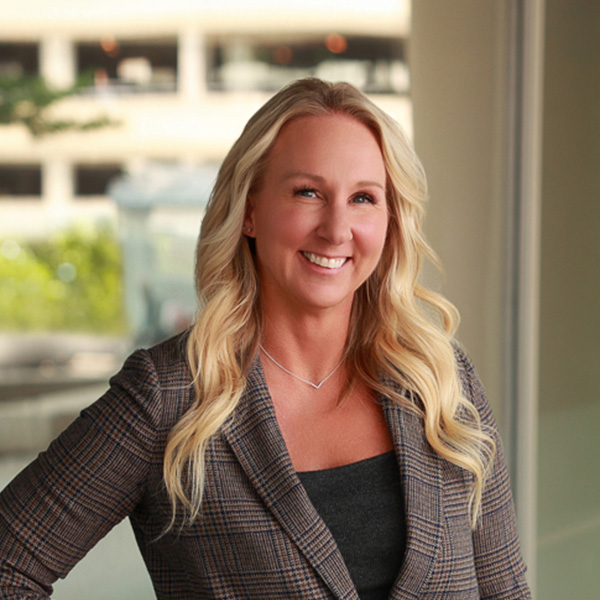
woman dressed in business suit smiling

Angela Leek, PhD, CHP

Director of Radiological Solutions & Regulatory Affairs

William "Jeff" Skinner, M.D.

Jeff Skinner, MD

Radiology Oncologist | CBRNE SME

If you’re attending I/ITSEC, we welcome you to join us at this session to learn more. Read the full abstract on page 84 of the conference agenda.

Meet the Experts

Find SummitET experts at Booth #2457.

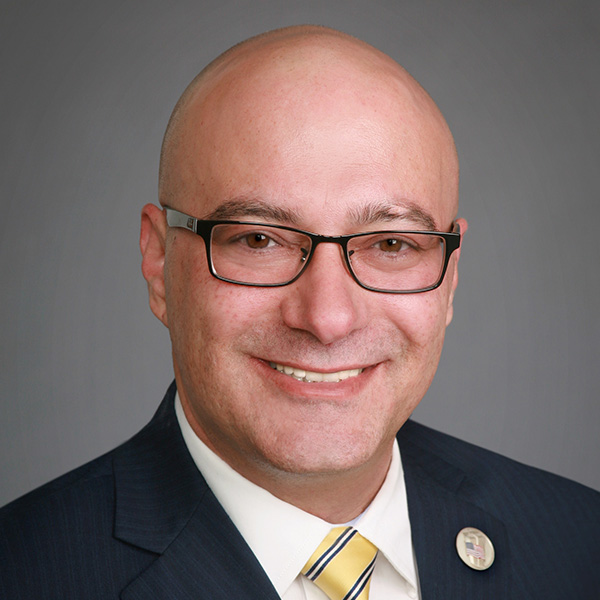
Man in business suit wearing glasses and smiling

Adam Montella

Executive Vice President

John Duda, Chief Executive Officer and founding partner at SummitET

John Duda

Chief Executive Officer

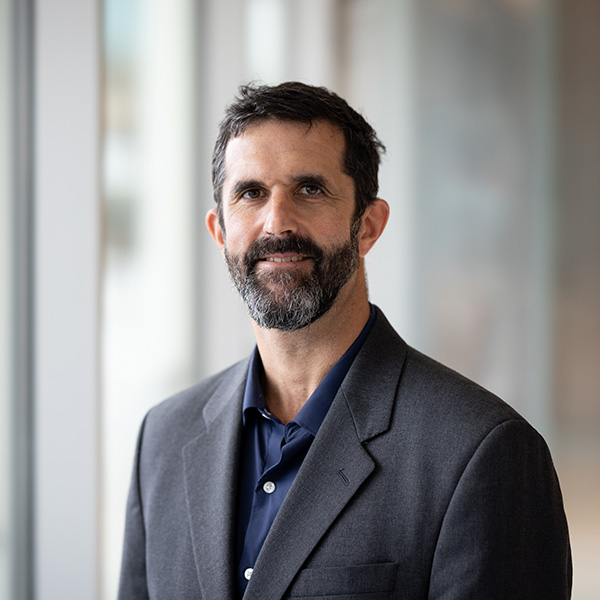
Andrew Manson Law Enforcement and CBRNE Subject matter expert

Andrew Manson

Program Manager | Law Enforcement and CBRNE SME

Leave Us a Message

Get in touch with our experts before the conference to get additional information or set a meeting time.

SummitET News

SummitET to Showcase AI-Powered Previstar at NHSC 2026

SummitET to Showcase AI-Powered Previstar at NHSC 2026

Live demonstrations at Booth #313 will show how Previstar unifies planning, resource management, operational awareness, and incident execution to enable Continuous Operational Readiness. Summit Exercises and Training (SummitET®) will showcase the next generation of...

read more
SummitET to Present Radiation Communications Strategies at National Radiological Emergency Preparedness Conference (NREP)

SummitET to Present Radiation Communications Strategies at National Radiological Emergency Preparedness Conference (NREP)

Summit Exercises and Training LLC (SummitET®) experts will be presenting at the 34th annual National Radiological Emergency Preparedness Conference (NREP) in Dallas, Texas from April 29 to May 2, 2024.

The mission of NREP is “to provide a professional forum for individuals involved with the Offsite Radiological Emergency Preparedness programs to gather in the spirit of continuous self-improvement to share program experiences, develop solutions to common challenges, and create innovative planning, exercising, and training methodologies.”

SummitET offers multi-agency radiological preparedness exercises, trainings, and workshops for emergency planners and field personnel, led by our team of Strategic Communications experts, Certified Health Physicists, and Radiation Safety experts.

Join our expert sessions during the 2024 NREP Conference:

Keynote: “Using AI for Enhanced Radiological Emergency Preparedness Planning and Outreach: Emerging Threat or Emerging Opportunity?”

Session 8 | Tuesday, April 30, 8:30am

Holly Hardin

Holly Hardin

Director of Strategic Communications

Abstract

Artificial intelligence (AI) stands at the forefront of revolutionizing various aspects of our lives. AI’s ability to analyze vast amounts of data in real-time and its capacity for automation, predictive analytics, natural language processing, and image recognition are providing efficiencies and enhancements in all areas of preparedness. AI’s dynamic role in our lives is shaping how we plan for, respond to, and recover from evolving threats and complex challenges that demand a multifaceted approach to preparedness. However, these efficiencies and opportunities do not come without inherent risks and challenges. Ethical considerations and potential challenges associated with AI implementation to prepare for, respond to, and recover from a radiation emergency will also be addressed. At the end of this session, participants will gain an understanding of how AI is revolutionizing and shaping the future of radiological preparedness planning and outreach.

“Effectively Communicating With Patients and Healthcare Staff During a Radiological Event”

Steve Sugarman, SummitET
Ben Maltz, Washington Department of Health

Session 23 | Wednesday, May 1, 10:15am

Steve Sugarman, Vice President

Steve Sugarman, CHP

Vice President | Corporate Health Physicist

Abstract

Healthcare providers dealing with those involved in a nuclear power plant incident or other radiological emergency need to be able to understand the situation and make good decisions. Effective communication between health physicists and healthcare providers during a radiological emergency is critical to achieving positive treatment outcomes. Those tasked with medically managing victims of radiological incidents may be expected to have the same concerns as other members of the public when faced with a radiation event and may therefore have questions that could affect their willingness to respond or their ability to respond without the distraction of worrying about a misunderstood hazard.

Concerns that may need to be addressed include, but are not limited to: What are the risks associated with treatment of irradiated patients? Is it safe to admit a contaminated patient into the hospital? What are the priorities when treating a contaminated injured patient? How can I protect myself from radioactive materials?

Patient concerns are also an issue that needs to be addressed. Effective communication with patients and/or their families can have a significant impact on the healthcare organization. Examples of where effective radiological communications with patients/involved individuals play an important role for the healthcare institution: addressing an emergency room full of the worried-well, patient acceptance of prognoses or medical countermeasures, support at triage or population monitoring areas, and others.

While health physicists understand their roles include dose estimation, contamination control, etc., many do not understand their communication roles. Taking the time to develop good messages and effectively communicate with the involved individuals will ensure the healthcare provider understands the risks and priorities associated with a radiological response and the patient understands the implications of the radiation dose they may – or equally as important – may not have received.

“Readability and Accuracy of DRDs at Low Doses of Radiation”

Angela Leek, SummiET
Scott Wendt, Iowa State University

Session 28 | Wednesday, May 1, 1:55pm

“Decoding the Response: Leveraging Mental Models in Radiological Emergencies”

Session 40 | Thursday, May 2, 2:15pm

Angela Leek

Angela Leek, PhD, CHP

Director of Radiological Solutions and Regulatory Affairs

Abstracts

Readability and Accuracy of DRDs at Low Doses of Radiation

The 2019 REP program manual suggests that offsite response organizations provide emergency workers (EWs) with two direct reading dosimeters (DRDs): a low range and a high range. This recommendation is based on the observation that higher-range dosimeters, like those reading 0-SR or 0-20R, might not show changes at the 500mR dose level. There’s concern that such dosimeters might lead a responder to receive their maximum allowed dose of 5 rem before noticing any accumulated dose. This risk arises from applying correction factors, often around 5 times, to account for internal doses. In contrast, lower-range DRDs, which are believed to reflect lower doses more accurately, might max out before reaching the dose limit. Thus, the two-dosimeter approach is suggested.

However, there are limited scientific data about high-range DRDs’ capability to detect and display doses at the lower end of their scales. Furthermore, few studies gauge how well emergency workers can spot minute changes below the 1 R level on high-range DRDs.

Our study assesses the response of high-range pencil dosimeters and their readability, especially for responders unfamiliar with radiation environments. Issuing two DRDs might be challenging operationally; emergency workers could face confusion about which to read or report, potentially adding to the stress of their tasks.

In this follow-up presentation from one made at NREP in 2023, we’ll present data gathered from the general public, representing emergency workers at a NPP incident. These participants were tasked with reading high-range DRDs exposed to low radiation doses to assess their ability to accurately read each dosimeter at low exposures (below 1 R).

Decoding the Response: Leveraging Mental Models in Radiological Emergencies

Imagine standing at the precipice of a radiological emergency—where the knowledge you hold and the myths you believe could spell the difference between control and catastrophe. This is where our recent research kicks in, revealing a reality that isn’t surprising to most who have been in the field for a while: the mental model of emergency responders, their grasp on radiation and risk, can have a significant impact on how they respond. Those who have confidence in their training and in the leaders directing them more effectively executed expected response procedures. But there’s a catch: if they have the wrong idea about the risks of radiation—for example, thinking that a 25-rem dose is more dangerous than it actually is—their performance takes a hit.

It’s time to take a close look at what misconceptions our current approach to training may be subtly reinforcing. Ask yourself: Are the myths of radiation fully dispelled in your training? Is your own knowledge influenced by ingrained fallacies? Using insights from this recent study and a tool called
the EMMS Diagnostic Matrix, we’re set to reshape our understanding of emergency response behavior. But knowing is only half the battle; the real challenge lies in applying this knowledge to develop more effective training methods, perhaps through virtual reality experiences, and then evaluating their effectiveness. This session is more than a presentation—it’s an invitation to learn how we can use innovative approaches to improve our understanding of responders’ training needs and our collective approach to radiological risk perception.

Radiation Industry Tools

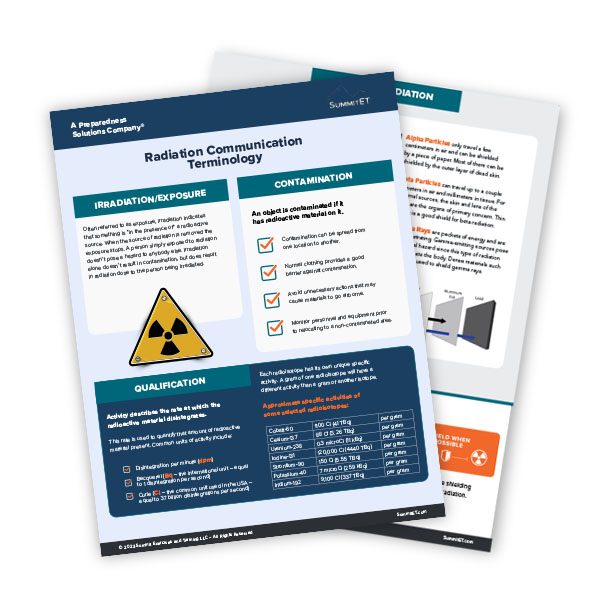
Radiation Communication Technology resource
Radiation Communication Terminology
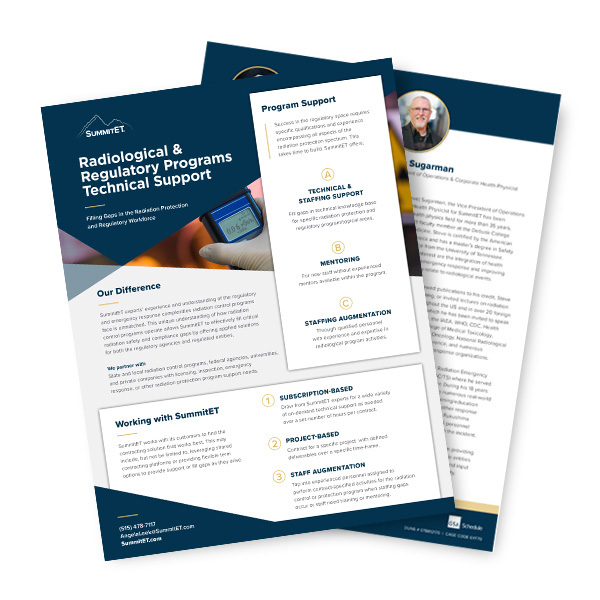
Radiological and Regulatory Programs Technical Support
Radiological & Regulatory Programs Technical Support

Request a Meeting With Our Experts

[wpforms id="3560"]

Or Pick a Meeting Time

See Upcoming Events

Our experts are consistently in the field at conferences and trade shows to stay on top of industry trends and innovative preparedness solutions. Find out where our team will be next and schedule a meeting.

Radiation Communications Resources

SummitET News

SummitET to Showcase AI-Powered Previstar at NHSC 2026

SummitET to Showcase AI-Powered Previstar at NHSC 2026

Live demonstrations at Booth #313 will show how Previstar unifies planning, resource management, operational awareness, and incident execution to enable Continuous Operational Readiness. Summit Exercises and Training (SummitET®) will showcase the next generation of...

read more
SummitET Offering Exercises and Training Support at I/ITSEC 2023

SummitET Offering Exercises and Training Support at I/ITSEC 2023

SummitET® is excited to participate in and present exercises and training capabilities at this year’s Interservice/Industry Training, Simulation, and Education Conference (I/ITSEC) in Orlando, Florida from November 27 to December 1. 

I/ITSEC is the world’s largest modeling and simulation event. The 2023 conference theme Sustaining a Global Force in a Digital World “challenges our community to consider the human within digital environments and how digital technologies support global military readiness.”

SummitET’s Director of Radiological Solutions and Regulatory Affairs, Angela Leek, coauthored two papers that will be presented at this year’s conference:

Tuesday, November 28 at 1400
Session 23174 

Using VR Simulations in Conjunction with Priming to Enhance Conceptualizing Radiation and Risk  

Wednesday, November 29 at 1030
Session 23449 

Me and My Report: A Segmentized After-Action Review Embedded Report Application for Supporting Maintenance Training in VR

Angela Leek, CHP, Director of Radiological Solutions and Regulatory Affairs at SummitET

Angela Leek

Director of Radiological Solutions and Regulatory Affairs

If you’re attending I/ITSEC, we welcome you to join us at these sessions to learn more. The papers will be posted after the conference on the I/ITSEC publications and proceedings page. 

SummitET has quickly grown its reputation as a leader in developing and supporting preparedness solutions that prioritize industry best practices and the latest developments in learning and technology. Drawing on their diversity of experience in emergency management and response, communications, and Chemical, Biological, Radiological, and Nuclear (CBRN) across military, government, and private sector applications, SummitET experts bring a comprehensive perspective to preparing for and managing a variety of risks. We provide solutions including full-scale field exercises, table-top exercises, plan development support, threat assessments, technical training and education and beyond.

Our training and simulation support includes:

CBRN Preparedness

Our preparedness capabilities include conducting threat assessments, developing response plans for potential threats, building training designed to mitigate the threats, and providing a suite of tailored workshops and exercises to test the readiness as well as providing the operational support an organization may require.

Strategic Communications Training

This includes comprehensive training in Joint Information System (JIS)/Joint Information Center (JIC) methodology and practices, risk and crisis communications, media relations, workshops, and exercises.

Social Media Simulation

Our training replicates real-world simulations conducted on closed native digital platforms to provide real-time, hands-on familiarity with social media tools and practices. 

Technical Consulting

Our diverse range of technical experts can support CBRNE effects modeling and simulation for realistic scenarios or augment exercises and training with technical support.

Contract Vehicles 

SummitET holds government contract vehicles that allow us to provide technical, programmatic, and business support services to federal and state/local agencies. Additionally, we are a subcontract team member for DTRA’s Assessment, Exercises, Modeling, and Simulation Support (AEMSS) multiple award contract.

Exercise and Training Simulation Support

Learn more about our experience and capabilites within exercise and training simulation support.

SummitET IITSEC Exercise Capabilities

Meet Our Experts at Booth 3158

Adam Montella, Senior Vice President at SummitET

Adam Montella

Senior Vice President

John Duda, Chief Executive Officer and founding partner at SummitET

John Duda

Chief Executive Officer

Andrew Manson Law Enforcement and CBRNE Subject matter expert

Andrew Manson

Program Manager | Law Enforcement and CBRNE SME

Request a Meeting

[wpforms_selector form_id=”3331″ _builder_version=”4.20.2″ _module_preset=”default” min_height=”651.2px” custom_margin=”-75px|||||” hover_enabled=”0″ global_colors_info=”{}” sticky_enabled=”0″][/wpforms_selector]

SummitET News

SummitET to Showcase AI-Powered Previstar at NHSC 2026

SummitET to Showcase AI-Powered Previstar at NHSC 2026

Live demonstrations at Booth #313 will show how Previstar unifies planning, resource management, operational awareness, and incident execution to enable Continuous Operational Readiness. Summit Exercises and Training (SummitET®) will showcase the next generation of...

read more