


Department of Health and Human Services & GrantSolutions

Department of Health and Human Services & GrantSolutions

Background

The Department of Health and Human Services (HHS) and GrantSolutions faces a rapidly evolving cyber threat landscape that puts sensitive data and critical systems at risk. To address these challenges, HHS sought a strategic partner with the expertise and capabilities to enhance its cybersecurity posture, ensure regulatory compliance, and promote a culture of continuous improvement.

Mission

We are committed to fortifying HHS’s cybersecurity landscape. This requires regular testing and training focused on the prevention, protection, and response to emerging cyber threats.

Solution

  • Comprehensive Penetration Testing and Vulnerability Scans to identify and mitigate weaknesses
  • Ensuring compliance with NIST 800-171 standards to meet regulatory requirements
  • In-depth reviews of the existing cyber plan to align with best practices
  • Facilitating Tabletop Exercises with senior stakeholders, followed by after-action meetings to assess and strengthen incident response protocols

Result

Through a multiyear contract, SummitET continues to drive measurable improvements in cyber vulnerability management for HHS and its partners. This collaborative approach has resulted in enhanced security measures, stronger controls, and increased program sustainability.

Conclusion

By partnering with SummitET, HHS has significantly advanced its cybersecurity defenses, ensuring better protection for its assets and stakeholders. This ongoing commitment to proactive assessment and training ensures that HHS remains resilient in the face of ever-changing cyber risks.


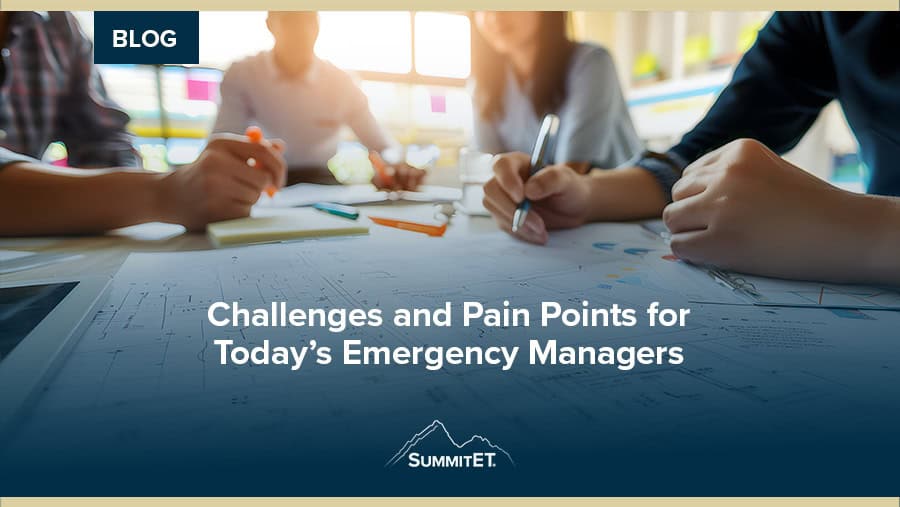
Challenges and Pain Points for Today’s Emergency Managers

Challenges and Pain Points for Today’s Emergency Managers

Today’s emergency managers are tasked with navigating an ever-increasing array of threats, from natural disasters to technological hazards, while coordinating response efforts across multiple agencies and stakeholders. Here, we delve into some of the most pressing pain points that these professionals face in their mission to safeguard communities. 

Resource Constraints

Whether it’s a lack of funding, insufficient staffing, or inadequate equipment, emergency managers often find themselves trying to do more with less. Resource constraints can severely hamper the ability to plan effectively, respond swiftly, and recover efficiently from disasters. 

Funding Shortfalls

Emergency management departments frequently struggle with budget cuts and limited financial resources. These shortfalls can impact everything from preparedness initiatives to disaster response capabilities. Without adequate funding, it becomes challenging to invest in essential training, acquire necessary technology, or even maintain basic operational readiness.

Staffing Issues 

It can also be challenging to attract and retain skilled personnel. The demanding nature of the job, coupled with often modest compensation, can lead to high turnover rates and a shortage of qualified emergency management professionals, this affects day-to-day operations and the overall resilience of the community.

Complex Coordination 

Effective emergency management requires seamless collaboration between local, state, federal, and sometimes international entities. However, differing priorities, communication barriers, and jurisdictional disputes can complicate these efforts. 

During a crisis, clear and timely communication is vital, yet interoperability between various agencies’ communication systems can be lacking. This can lead to delays in response, misallocation of resources, and ultimately, a less effective disaster management effort. 

Furthermore, confusion over roles and responsibilities can lead to inefficiencies and even conflicts that impede the overall response effort. Establishing clear protocols and agreements before a disaster strike is crucial. 

Technological Challenges 

While technology has the potential to revolutionize emergency management, it also presents its own set of difficulties.  

Data Overload 

In today’s data-driven world, emergency managers have access to vast amounts of information which can be both valuable and overwhelming. Sifting through and analyzing large datasets to make informed decisions in real-time is difficult, particularly during a rapidly unfolding crisis. 

Cybersecurity Threats 

As reliance on digital systems grows, so does the risk of cyber-attacks. Emergency management infrastructure, including communication networks and data storage systems, can be vulnerable to cyber threats. Protecting these systems is critical to ensuring that emergency responses are not disrupted by malicious actors.

Community Engagement 

Engaging the community is a cornerstone of effective emergency management, yet it remains a challenging task. Building trust, raising awareness, and encouraging preparedness among the public requires ongoing effort and innovative strategies. 

Despite efforts to educate communities, many individuals remain unaware of potential hazards or unprepared to respond effectively when disaster strikes. Overcoming this requires targeted outreach and education programs that resonate with diverse audiences. 

Simultaneously, emergency managers must work diligently to build and maintain strong relationships with community members. 

Learn how applying the IDEA Model to you communications can help improve community engagement.  

The IDEA Model for crisis and risk communication shown as a triangle that cycles between internalization (I), distribution (D), explanation (E), and action (A).

The Path Forward 

Despite these challenges, the future of emergency management holds promise. Investing in robust training programs, fostering collaboration across agencies, leveraging new technologies, and engaging communities more effectively can all contribute to overcoming obstacles in the field. By addressing these issues head-on, emergency managers can enhance their ability to protect and serve their communities in times of crisis. 

SummitET®, A Preparedness Solutions Company®

SummitET can relieve some of the burdens your emergency management team may face. We specialize in designing, developing, conducting, and evaluating preparedness training courses, exercises, and senior-level workshops for government and private organizations. Our greatest strength is the experience and qualifications of our HSEEP Trained team. Nearly all of our subject matter experts are former members of federal or state/local agencies with crisis management experience.

Contact us to learn more.

Join us at IAEM 2024

IAEM Annual Conference 2024 Colorado Springs

As part of our commitment to promoting emergency preparedness, we are attending the upcoming International Association of Emergency Managers (IAEM) Annual Conference in Colorado Springs, CO. Join us at our booth to meet our experts and learn more about our innovative preparedness solutions.

Nuclear emergency readiness partnership with SummitET and NEST

Setting the Standard: Training, Strategic Guidance and Partnerships in Nuclear Emergency Readiness

How SummitET and NEST Raise the Bar for Radiological and Nuclear Incident Preparedness.

SummitET Bridging the Gap podcast episode 17 Communicating about risk

Bridging the Gap Episode 17: Empathy and Expertise: Communicating About Radiation Risk

In this episode of Bridging the Gap, Health Physicist Steve Sugarman speaks with host Mark Amann, a veteran strategic communicator, about the nuances and challenges of communicating about radiation in times of crisis.

Bridging the Gap Podcast: The Evolution and Capabilities of Previstar: A Journey Through Time

Bridging the Gap Episode 16: The Evolution and Capabilities of Previstar®: A Journey Through Time

In this episode of Bridging the Gap, SummitET experts speak with Himadri Banerjee, Previstar® CPS™ developer and SummitET CTO, about the history and capabilities of Previstar, a software that has played a pivotal role in emergency and incident management for over two decades.

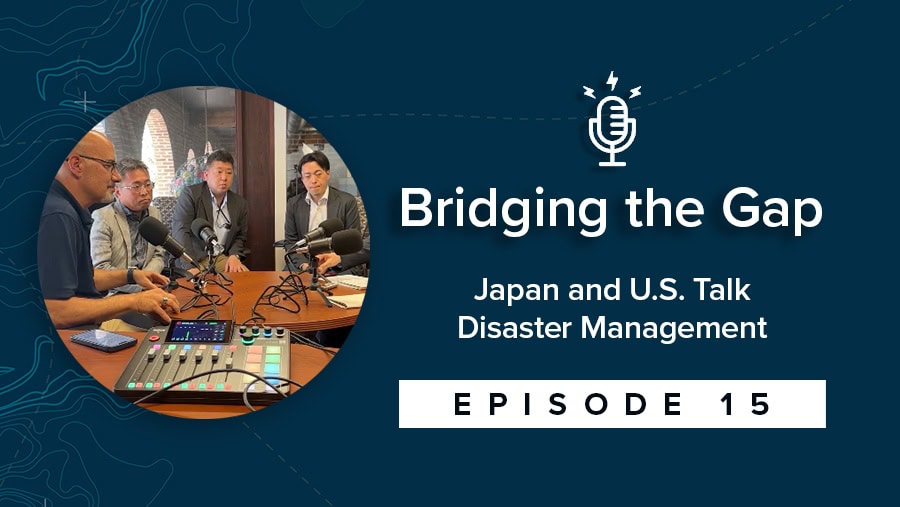
Bridging the Gap Episode 15 Japan and U.S. Experts Talk Disaster Management

Bridging the Gap Episode 15: Japan and U.S. Experts Talk Disaster Management

In this episode of Bridging the Gap, SummitET had the honor of hosting a distinguished delegation of disaster management experts from Japan. This visit, ahead of the National Hurricane Conference, provided a unique opportunity to exchange ideas and share experiences in disaster management and preparedness.

SummitET National Policy and Planning Expert Scott J. Glick to Present at National Homeland Security Conference

SummitET National Policy and Planning Expert Scott J. Glick to Present at National Homeland Security Conference

Scott J. Glick, Summit Exercises and Training LLC (SummitET®) Vice President and General Counsel, will be presenting at the National Homeland Security Conference (NHSC) in Cleveland, Ohio, that will take place July 11-14, 2022.  Glick, who previously was an international terrorism prosecutor with the U.S. Department of Justice and served as its Director of Preparedness and Response in the National Security Division, will be discussing how law enforcement and consequence management officials can integrate their operations during “left of boom” terrorist threats.

About National Homeland Security Conference

Scott Glick VP and General Counsel
The NHSC, which was originally conceived as an information sharing opportunity in support of the Urban Area Security Initiative (UASI), brings together professionals in homeland security, law enforcement, and fire and emergency management. The HNSC provides an opportunity for officials from federal, state, and local agencies, as well as representatives from nonprofit agencies, businesses, and universities to discuss emerging trends in homeland security and to see leading-edge equipment and technology available to support their missions.

Expert Session

Glick’s presentation will build on the article he wrote in 2020, Preparatory Consequence Management & Weapons of Mass Destruction, and his panel will also include Kasey Salway, the FBI’s WMD Directorate’s Unit Chief for the Strategic Partnership Unit, and Steve Chase, a Program Scientist in FEMA’s Response Directorate in its CBRN Office. The panel will be open for discussion and will also have an opportunity to be ranked “Best in Show” by attendees using the NHSC app. In support of the UASI’s emergency management needs, SummitET leverages global experience and public, private, and military subject-matter expertise to provide counterterrorism, weapons of mass destruction (WMD), and Chemical, Biological, Radiological, Nuclear, and Explosive (CBRNE) exercise and training support. SummitET’s trainers and program management professionals offer knowledge and know-how with real world events and response experience. Join Glick’s session during the 2022 NHSC Conference on Tuesday, July 12 at 11am for the following:

Integrating Preparatory Consequence Management and Law Enforcement Operations During “Left of Boom” Terrorist Threats Excerpt

“Mother Nature” does not care if the nation is prepared for a hurricane. However, if the government is aware of a terrorist threat, but the public is not aware, and the government conducts highly visible preparatory consequence management operations, an alerted terrorist could change tactics or attack a different target. To avoid this potential “no-win” scenario, Response and Prevention Mission planners must consider the unique and complicating factors that can adversely affect their respective mission’s success during credible terrorist threats, particularly those involving a weapon of mass destruction. To bridge a gap in national policy and planning guidance, this presentation will propose a new way that officials across all levels of government can cohesively integrate preparatory consequence management operations and law enforcement operations during “left of boom” terrorist threats to maximize the ability to stop the terrorist and minimize the potential consequences of the terrorist’s actions. Learn more about Scott Glick here.

Visit Our Booth To Win

You can also find SummitET experts at the NHSC Conference trade show booth #213. Take a quick survey at our booth to win preparedness giveaways including t-shirts and Yeti® cups marked with the SummitET tagline “Preparedness is not an accident®”. Or schedule a sit down with our experts to see how we can help you reach your preparedness goals.

Request a Meeting with our Experts

[wpforms id="3638"]

SummitET News

Combating Cyber Threats in Telework Environments

Combating Cyber Threats in Telework Environments

remote employee working on laptop from alternate location
Given recent events, the cyber security landscape has changed and may have exposed new vulnerabilities to cyber systems. With many government and private industries quickly shifted to telework, threat actors are taking advantage of these changes and are posing an increased risk to cyber systems with data and network vulnerabilities. According to the Department of Homeland Security Cybersecurity and Infrastructure Security Agency (CISA), as with most emerging threats, cyber-attacks are constantly evolving and tend to increase during disasters and high-profile events to take advance of such situations. These trends are providing new opportunities for threat actors.

Reduce Risk

CISA, reports that cyber attackers are using phishing messages or applications masked as trusted sources against newly —and often rapidly—deployed remote access and teleworking infrastructure. To protect your organization and employees, it is imperative to reduce the risk of cyber threats by building programs that effectively manage these threats. The establishment and practice of a cybersecurity program or system of protection that reduces risk from cyberattacks is essential to business continuity and data protection of any organization’s workforce. This can include assessing and securing cyber systems, developing a skilled and compliant workforce, and building a skilled information technology (IT) security team to detect and resolve threats.

Training and Exercising

If your organization has not built, trained, or exercised a cybersecurity program, now is certainly the time to do so. SummitET® can help you develop a tailored program to meet your business needs. Our top-in-field experts perform penetration testing, vulnerability assessments, social engineering testing, workforce, and information technology team training, and exercises that test incident action planning, processes, and procedures.

With emerging threats changing the business and workforce environment, organization’s must protect assets, data, and members of its workforce. To learn more about SummitET’s cybersecurity preparedness solutions or to speak directly to one of our experts.

For official, verified cyber-related alerts, questions, or to report a cyber issue, visit the Department of Homeland Security Cybersecurity and Infrastructure Security Agency (CISA) website at: https://www.cisa.gov/insights.

Nuclear emergency readiness partnership with SummitET and NEST

Setting the Standard: Training, Strategic Guidance and Partnerships in Nuclear Emergency Readiness

How SummitET and NEST Raise the Bar for Radiological and Nuclear Incident Preparedness.

SummitET Bridging the Gap podcast episode 17 Communicating about risk

Bridging the Gap Episode 17: Empathy and Expertise: Communicating About Radiation Risk

In this episode of Bridging the Gap, Health Physicist Steve Sugarman speaks with host Mark Amann, a veteran strategic communicator, about the nuances and challenges of communicating about radiation in times of crisis.

Bridging the Gap Podcast: The Evolution and Capabilities of Previstar: A Journey Through Time

Bridging the Gap Episode 16: The Evolution and Capabilities of Previstar®: A Journey Through Time

In this episode of Bridging the Gap, SummitET experts speak with Himadri Banerjee, Previstar® CPS™ developer and SummitET CTO, about the history and capabilities of Previstar, a software that has played a pivotal role in emergency and incident management for over two decades.

Bridging the Gap Episode 15 Japan and U.S. Experts Talk Disaster Management

Bridging the Gap Episode 15: Japan and U.S. Experts Talk Disaster Management

In this episode of Bridging the Gap, SummitET had the honor of hosting a distinguished delegation of disaster management experts from Japan. This visit, ahead of the National Hurricane Conference, provided a unique opportunity to exchange ideas and share experiences in disaster management and preparedness.