Bridging the Gap Episode 2: Stolen Radiation Sources

Bridging the Gap Episode 2: Stolen Radiation Sources

SummitET Subject Matter Experts interpret the emerging threat discussed in the following article. 

Three months, three missing radioactive items. Here’s what you need to know” by Tara Subramaniam

CNN.com, March 31, 2023 

non destructive testing

The recent articleThree months, three missing radioactive items. Here’s what you need to know provides an overview of the recent loss of regulatory control of three items containing radioisotopes in Thailand, Australia, and the United States. The article offers examples of how radioisotopes are used in commercial applications, discusses their associated hazards, and addresses the frequency of loss of regulatory control as seen in these three cases.

Radioactive Isotopes Uses

Radiological materials are used for beneficial purposes across the nation and the world daily – in medicine, research, and industrial applications. These materials are important for diagnosing and treating medical conditions like cancer or to ensure that the integrity of infrastructure like roads or pipelines are verified before beginning construction or use.  

The nature and use of radioactive materials in devices vary. In the U.S., radioactive materials are highly regulated, and the level of regulation, security, and oversight is based on the potential risk posed from the sources within the device. The U.S. Nuclear Regulatory Commission (NRC) and 39 Agreement States work together to ensure that all radioactive materials are properly licensed and used across all industries.

Industrial Radiography Camera

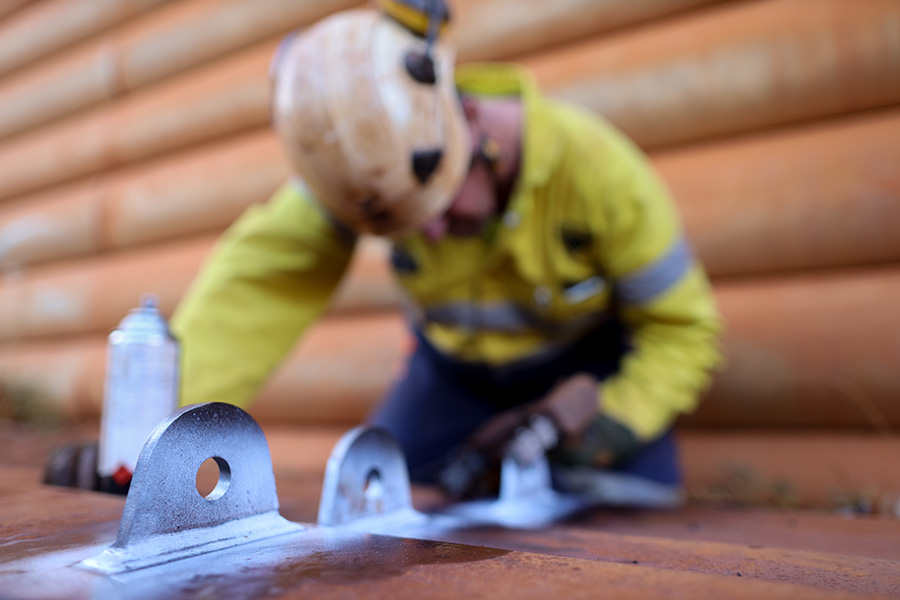
The industrial radiography camera, like the one that went missing recently in the U.S., is one common device that has greater regulatory oversight due its use as a high activity source. It is used in industrial settings for various types of non-destructive testing, but most commonly it is used to image welds or other structural integrity of pipes or metal structures. Most of these devices use an Iridium-192 (Ir-192) source which emits strong gamma photons that are needed to penetrate through the metal to create the images used to look for cracks or defects in the welds, among other purposes. Thousands of industrial radiography jobs are safely conducted across the nation every year.

The Ir-192 source is kept inside a very robust, shielded container, about the size of a shoebox, except when the imaging is occurring – then it is cranked out of the shield through a long tube to expose the film around the pipe or weld of interest. The source is only outside of the shielded housing for 30 seconds to a minute at a time and under very controlled settings carefully managed by the trained operators. This operator training, as well as the requirements for storage, security, transportation, and general use of the device, is outlined in regulations, and the NRC and Agreement States work closely with the licensees who are using these devices.

Theft or Loss of Radioactive Materials   

Bottom-line, individuals can’t just go and purchase or use an industrial radiography camera or other higher activity source without meeting stringent regulations that include significant site security and background checks on those employees with access to the materials.  

However, as indicated in the article, accidents sometimes happen. When they do occur, immediate notification is required, the regulatory agencies actively coordinate with the licensee and any other appropriate agencies to locate the source and oversee any regulatory enforcement actions necessary to prevent other issues from occurring.

Prevention 

Sources can go missing by accident or by act of terrorism but in either scenario it is important that agencies are prepared to prevent and mitigate this risk. Preparing via the development of intelligence information sharing pathways, by creating specialized plans for communications, and other lifesaving tactics are what SummitET’s experts focus on when creating tailored solutions including exercises and training. Learn more how experts can help your agency be at its most prepared.

Contributors:

Angela Leek, Director of Radiological Solutions and Regulatory Affairs

Angela Leek, CHP

Director of Radiological Solutions and Regulatory Affairs

Andrew Manson Law Enforcement and CBRNE Subject matter expert

Andrew Manson

Law Enforcement/CBRNE SME

Justin walker law enforcement and SWAT Subject matter expert

Justin Walker

Law Enforcement SME/Retired Phoenix Police Officer/SWAT Operator; Lead RSARex SME

Kevin Quigley, CBRN and WMD Subject Matter Expert at SummitET

Kevin Quigley

All Hazards SME

Bridging the Gap Podcast: The Evolution and Capabilities of Previstar: A Journey Through Time

Bridging the Gap Episode 16: The Evolution and Capabilities of Previstar®: A Journey Through Time

In this episode of Bridging the Gap, SummitET experts speak with Himadri Banerjee, Previstar® CPS™ developer and SummitET CTO, about the history and capabilities of Previstar, a software that has played a pivotal role in emergency and incident management for over two decades.

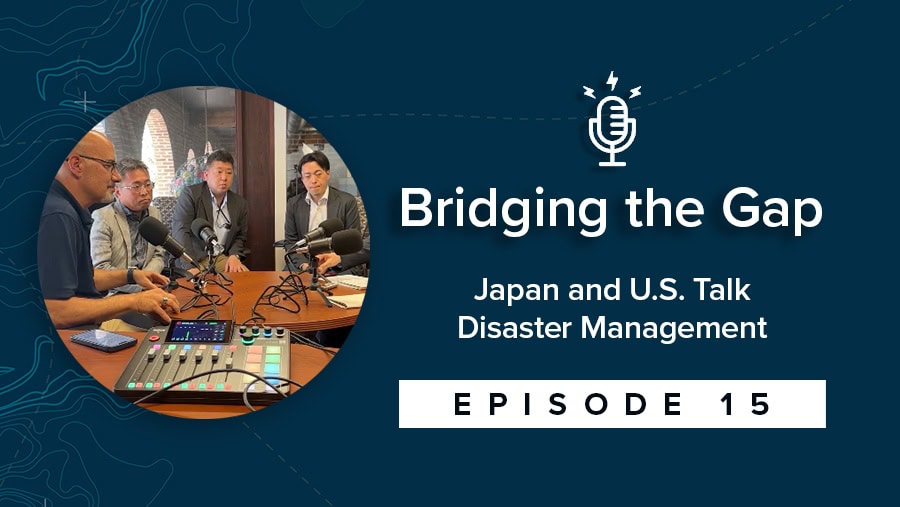
Bridging the Gap Episode 15 Japan and U.S. Experts Talk Disaster Management

Bridging the Gap Episode 15: Japan and U.S. Experts Talk Disaster Management

In this episode of Bridging the Gap, SummitET had the honor of hosting a distinguished delegation of disaster management experts from Japan. This visit, ahead of the National Hurricane Conference, provided a unique opportunity to exchange ideas and share experiences in disaster management and preparedness.

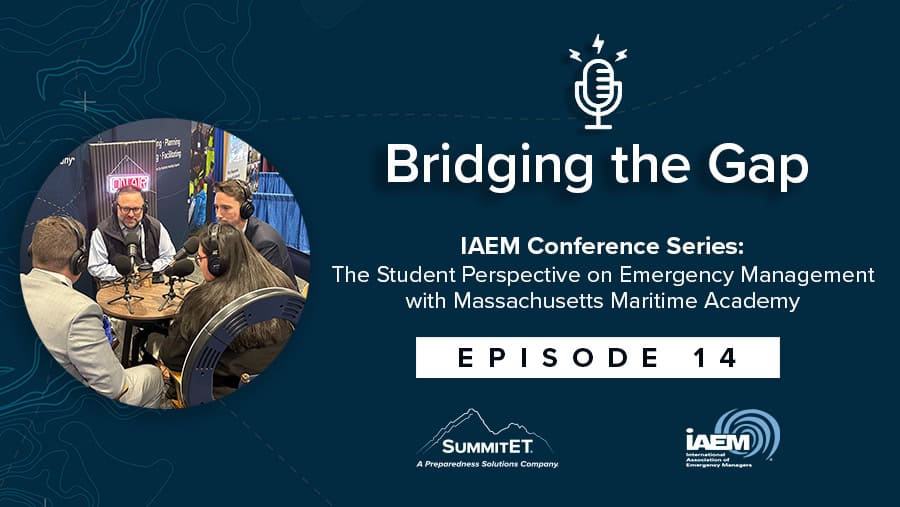
Bridging the Gap IAEM Series Episode 14 with Emergency Management Students

Bridging the Gap IAEM Series – Episode 14: The Student Perspective on Emergency Management

In this special IAEM Conference Series episode of Bridging the Gap, SummitET podcast host and former emergency manager Ron Crane meets with Massachusetts Maritime Academy students about their experiences studying and interning in Emergency Management and their perceptions regarding challenges in the field.

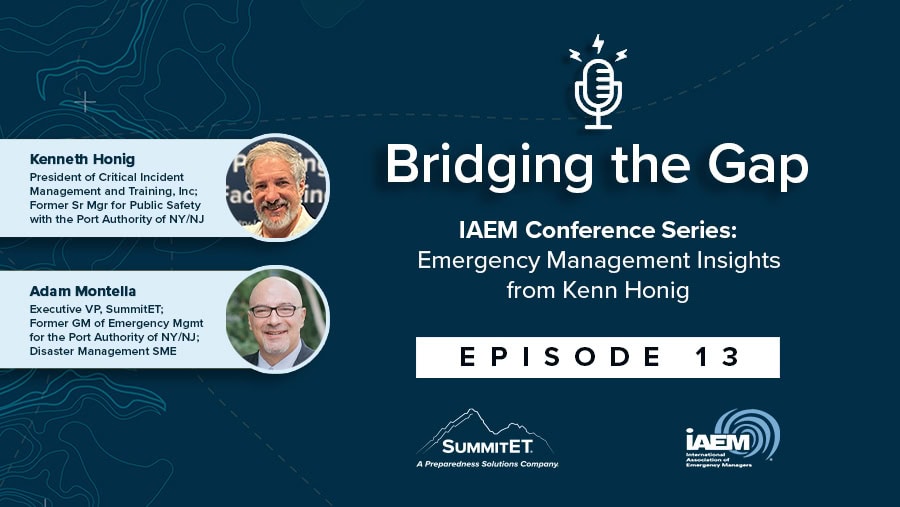
SummitET Bridging the Gap Podcast IAEM Series Kenn Honig

Bridging the Gap IAEM Series – Episode 13: Emergency Management Insights from Kenn Honig

In this special IAEM Conference Series episode of Bridging the Gap, SummitET host Adam Montella is joined by Kenn Honig, a seasoned emergency management consultant with a long career in law enforcement and emergency management at the Port Authority of New York and New Jersey. Join this insightful discussion as they navigate the evolution of emergency management practices, the technological advancements over the decades, and the undeniable importance of personal contacts in the field.

SummitET Welcomes Former Chief of Military Medical Operations at the Armed Forces Radiobiology Research Institute, Dr. Jeff Skinner

SummitET Welcomes Former Chief of Military Medical Operations at the Armed Forces Radiobiology Research Institute, Dr. Jeff Skinner

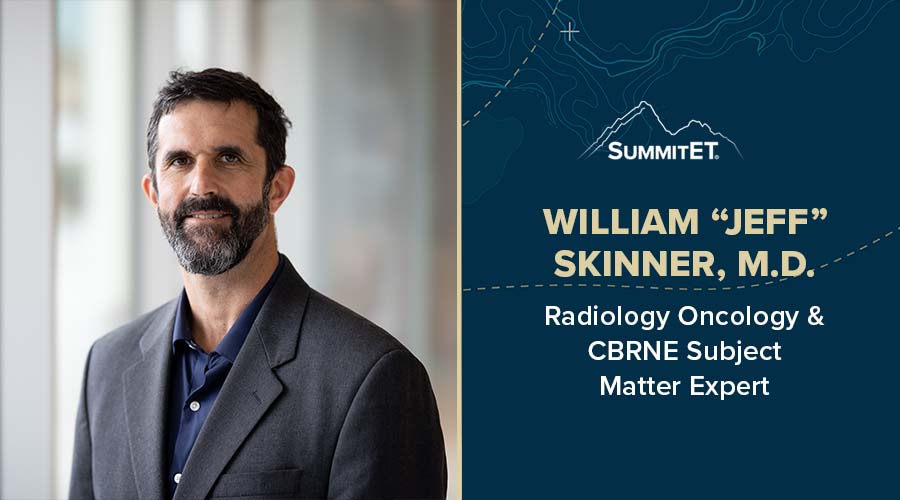
Summit Exercises and Training LLC (SummitET®), a Preparedness Solutions Company®, announces the addition of William “Jeff” Skinner, M.D. as the company’s new Subject Matter Expert in Radiology Oncology and Chemical, Biological, Radiological, Nuclear, and Explosives (CBRNE). A retired United States Air Force Colonel and former combat flight surgeon, Dr. Skinner will provide clinically-oriented CBRNE support to existing contracts within SummitET’s client portfolio, as well as continuing his translational research and real-world modeling efforts to improve the response to and preparedness for radiological/nuclear events.

“We must continue to study the impact of radiation mitigation and prophylaxis on the hematopoietic, gastrointestinal, immune system as well as delayed health effects from radiation exposure and contamination. I’m interested in improving data integration, decision-making, and risk assessment/management to improve outcomes and drive outcome-oriented research efforts,” said Dr. Skinner. 

Dr. Skinner is a graduate of the U.S. Air Force Academy, attended the University of Virginia for medical school and completed a residency in radiation oncology at Montefiore Medical Center/Albert Einstein College of Medicine in New York City. He has served as a combat flight surgeon in Iraq and retired from Walter Reed National Military Medical Center where he was the Program Director for the Radiation Oncology Residency Program, Chief of Military Medical Operations at the Armed Forces Radiobiology Research Institute, and was a Principal Investigator on numerous clinical and translational research projects. Awarded the Defense Distinguished Service Medal for his leadership in nuclear survivability and medical treatment, Dr. Skinner has led advanced modeling efforts involving radiation, blast, and thermal effects and has investigated the impact of biocomplexity and logistics on optimal management of causalities.  

“Dr. Skinner is an innovative, operationally and clinically-oriented leader with extensive experience and knowledge in the radiation oncology field. With his unique background and commitment to ongoing translational research and modeling, he is a valuable and exciting asset to our team of experts,” stated John Duda, CEO of SummitET.

William "Jeff" Skinner, M.D.

Jeff Skinner

Radiology Oncology & CBRNE Subject Matter Expert

Connect with our experts and start improving or developing your training and exercise plans today.

SummitET News

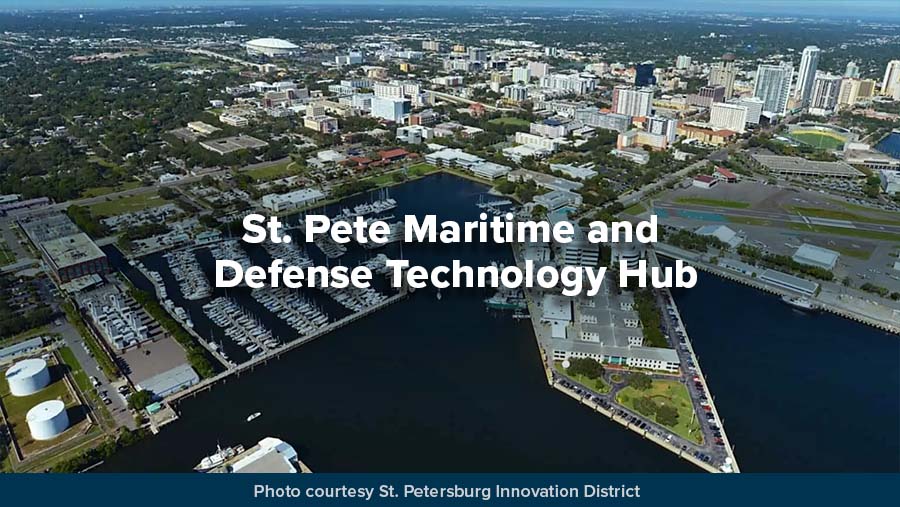
SummitET Joins St. Pete Innovation District Maritime and Defense Technology Hub

SummitET Joins St. Pete Innovation District Maritime and Defense Technology Hub

Summit Exercises and Training LLC (SummitET®) joins other prominent St. Pete companies, and state and federal agencies as a tenant of the Maritime and Defense Technology Hub (Hub) a collaborative innovation incubator. The Hub, located in the St. Pete Innovation District, brings together the triple helix of innovation under one roof: industry, government, and academia. Taking advantage of increased funding for maritime and technology solutions by the State and Federal governments, the Hub leverages the unique attributes of the building such as a workspace with port access, rooms designed for secure communications, and wet/chemical laboratories.

“The Innovation District’s mission is to develop St. Petersburg into an environment that fosters job growth, economic development, and learning and inspiration by bringing innovative people and organizations together,” said Alison Barlow, Executive Director of the St. Petersburg Innovation District.

Bringing to the Hub the diverse experience and expertise of associates with backgrounds in threat response operations and risk mitigation, SummitET experts include former employees of the Department of Defense, Department of Energy, Federal Bureau of Investigation, Federal Emergency Management Agency, the Intelligence Community, state/local law enforcement, and maritime.

“We are proud to be part of the Innovation District’s historic Hub,” said John Duda, SummitET CEO. “We look forward to collaborating with other Hub tenants in the pursuit of joint funding opportunities and community engagement.” 

SummitET is committed to partnering locally on issues of cybersecurity and maritime security, offering all-hazards preparedness solutions including cybersecurity penetration testing, continuity of operations, development of vessel security plans, processes and procedures for cargo security and mail screening, threat awareness training, facility vulnerability assessments, counterterrorism and CWMD, crisis and risk communications, exercises, and more.

SummitET News

The Importance of Conducting Exercises

The Importance of Conducting Exercises

Significant events over the past three decades have put pressure on the United States government to exercise response and preparedness.  Attacks both domestically and internationally have pushed legislation into domestic resilience, combating terrorism, incident command, and disaster preparedness.  In the 1980’s, the U.S. saw a rise of state-sponsored terrorism that included the following:

  1. In 1983, the United States embassy in Beirut, Lebanon was bombed, killing 63 people, mostly embassy and CIA staff members, as well as several soldiers and one Marine. 17 of the dead were Americans.

  2. In 1984, the Achille Lauro cruise ship was seized by a terrorist group known by the Palestine Liberation Front (PLF), holding 700 hostages, mostly Americans; 1 death.

  3. In 1985, TWA 847 flight hijacked; 1 death when a U.S Navy Diver was killed and tossed on to the Tarmac in Beirut, Lebanon.

  4. In December 1988, Pan Am 103 was bombed and exploded over Lockerbie, UK, killing all 270 people on board residing from 21 different countries.

In 1985 Vice President George Bush created “Vice President’s Task Force on Combating Terrorism” as the first end-to-end review focused on joint/interagency CT response assets coordination.  This review resulted in the passing of National Security Decision Directive 207 on Jan 20, 1986, where the U.S. National terrorism program first defined:  “U.S. Program on Combating Terrorism” crisis response to incidents overseas, ultimately guiding U.S. strategy for the next decade. Terrorism and other disasters continued to be the catalyst to push legislation and directives over the next 25 years, including the passing of several presidential policy directives that identified the need for better response and preparedness by first responders and follow-on response during a crisis.  Some of the legislation and policy directives specifically site the need for conducting tabletop exercises to help prepare for similar disasters.

Terrorism

In 1996, in response to the Tokyo sarin gas attacks and the Oklahoma City bombing, President Bill Clinton passed Presidential Policy Directive (PPD) 39.  Essentially, it stated it is the policy of the United States to “deter, defeat and respond vigorously to all terrorist attacks on our territory and against our citizens, or facilities, whether they occur domestically, in international waters or airspace or on foreign territory… the U.S. shall pursue vigorously efforts to deter and preempt, apprehend and prosecute, or assist other governments to prosecute, individuals who perpetrate or plan to perpetrate such attacks.”

Around that same time, many Congressional committees and subcommittees met on topics such as National Security and Combating Terrorism.  One of the programs discussed that demonstrated the expanded roll of the government in domestic preparedness is the Nunn-Lugar-Domenici Preparedness Program.  This program rose from the Defense Against Weapons of Mass Destruction Act of 1996 signed by President Clinton. This program looked to provide training for possible incidents involving terrorists using Weapons of Mass Destruction (WMD).  From this, the Department of Defense and Federal agencies were provided millions of dollars to conduct training, including tabletop exercises, in140 cities across the U.S.

Disasters and National Level Exercises

In 2005, Hurricane Katrina was considered the most destructive and costly hurricane to hit the United States, with damage estimated at $125 billion and 1,500 deaths across four states. Part of the blame lies on what appeared to be poor communication and response to this disaster, the Committee on Homeland Security and Governmental Affairs cited the failure of government at all levels to plan, prepare for, and respond aggressively to the storm.  Specifically, they stated that four overarching factors contributed to the failures.  These are:

  1. Long-term warnings went unheeded, and government officials neglected their duties to prepare for a forewarned catastrophe;

  2. Government officials took insufficient actions or made poor decisions in the days immediately before and after landfall;

  3. Systems on which officials relied on to support their response efforts failed; and

  4. Government officials at all levels failed to provide effective leadership.

The report stated that preparation plans and response were inefficient and not well devised.  Additionally, the report stated that the government had been insufficiently conducting training and exercises.  In 2005, DHS assumed full responsibility for planning, conducting, and after-action reporting of the National Exercise Program, known then as the Top Officials exercises or TOPOFF exercises.  In April 2005, DHS had implemented TOPOFF3 or the third tabletop exercise in the series which was designed to identify vulnerabilities in the Nation’s domestic incident management capability including the structure of the National Response Plan (NRP).  The NRP originated from Homeland Security Presidential Directive – 5 and was directed by President Bush to align Federal coordination structures, capabilities, and resources into a unified, all-discipline, and all-hazards approach to domestic incident management.

Exercises needed if done effectively

In response to the exercise, the Department of Homeland Security (DHS) Inspector General stated in November 2005: “the exercise highlighted – at all levels of government – a fundamental lack of understanding for the principles and protocols set forth in the NRP and the [National Incident Management System] NIMS.”  This identified confusion provoked discussion and demonstrated the importance of conducting exercises.  The absence of exercises in the NRP meant that there were no further formal opportunities to understand potential problems and to incorporate lessons learned into the NRP.

From these gaps and failures, DHS through the Federal Emergency Management Agency (FEMA) dropped the NRP in exchange for the National Response Framework (NRF). The National Response Framework (NRF) is a guide to how the Nation responds to all types of disasters and emergencies. It is built on scalable, flexible, and adaptable concepts identified in the National Incident Management System to align key roles and responsibilities across the Nation. This Framework describes specific authorities and best practices for managing incidents that range from the serious but purely local to large-scale terrorist attacks or catastrophic natural disasters. The National Response Framework describes the principles, roles and responsibilities, and coordinating structures for delivering the core capabilities required to respond to an incident and further describes how response efforts integrate with those of the other mission areas.

 The NRP was cited as being “insufficiently national in its focus… and …should speak more clearly to the roles and responsibilities of all parties involved in response.” This NRF is further covered under the signing of PPD 8 by President Obama, which in essence focused on an integrated, all-of-Nation, capabilities-based approach to all-hazard preparedness which can include, but are not limited to, the use of tabletop exercises as a form of preparation.

One thing Katrina did was reveal the impact that a lack of an effectively trained and exercised plan, as well as not practicing the interoperability of communications will further undermine the response. As part of the Committee on Homeland Security and Governmental Affairs, several recommendations were made to improve response, coordination and preparedness.  Of those, the committee recommended that “Federal departments and agencies should be required to conduct exercises to ensure that their plans are continually revised and updated,” as well as “emergency agencies at the federal, state, and local levels of government, as well as first-responder groups outside of government, should receive regular training on NRP and NIMS.” It is important to note that the NRP is considered the foundation of the NRF and it built upon, not entirely rebuilt, the national framework previously established.

Despite these failures, not all was a loss when, in 2005, DHS developed the Universal Task List (UTL) and Target Capabilities List (TCL).  The UTL helps exercise participants and planners by describing incident management tasks to be performed and provide them with a standardized reference for all levels of government and the private sector. The TCL contains capabilities that various levels of government need to develop and maintain to prevent, respond to, and recover from a terrorist attack or major disaster.  These two lists have proven useful to this day in all types and levels of exercise.

Exercise Progress

Through the lessons learned in the 1990s and the first decade of this century, exercises have been identified as a valuable tool for preparedness.  These lessons have shown the importance of addressing command and control during a crisis situation and working through scenarios such as a terrorist WMD incident or a major storm.  This progress has not always been so positive.  The final after-action report recommendations from the TOPOFF3 exercise failed to include improvement planning to address remedial needs and corrective action procedures which were not a part of the original evaluation.  It only informed participating departments and agencies of existing problems, and encouraged improvements in agency prevention, response, and recovery capabilities.  Furthermore, after-action reports, best practices, and lessons learned from the TOPOFF3 exercise have not been disseminated to a broad national audience.

Despite some of the problems stated, there is still great need for response assets to exercise their plans and prepare for disasters. For the response assets to take part in these exercises, it comes at the cost of government spending.  As Sequestration is taking effect and budgetary uncertainty lingers, training value needs to be maximized for ultimate effectiveness.  One cost-effective solution to providing an exercise that helps identify gaps or vulnerabilities in plans and preparedness are tabletop exercises. Tabletop exercises have evolved to incorporate the most important objectives and have been proven to be effective at training personnel without a large cost or resource commitment.  The difference in costs between a field exercise that requires the deployment of assets and a tabletop exercises can be as much as ten times. Despite this, field exercises are still necessary to ensure front line response and command post officials are able to handle their tasks and responsibilities in a stress added situation. So, can tabletop exercises provide the training and exercising of plans and procedures needed for response assets to prepare for a disaster?  Furthermore, the question that ultimately surfaces is how do we know this to be true from a discussion-based exercise?

Resources