Defense Threat Reduction Agency (DTRA) and MINES

Defense Threat Reduction Agency (DTRA) and MINES

Enabling Strategic Preparedness through Outreach, Training, and Expertise

Background 

The Defense Threat Reduction Agency (DTRA) plays a critical role in safeguarding national security by countering threats from nuclear, chemical, and biological hazards. To further its mission, DTRA sought to enhance readiness through the adoption of the Military Impact of Nuclear Events Software (MINES), a wargaming tool designed to assess and visualize nuclear event impacts. This initiative aimed to strengthen strategic planning and operational effectiveness across the Department of Defense (DoD) and other federal agencies.

Mission

DTRA’s objective was to conduct comprehensive outreach and training for the use of MINES, ensuring its effective integration in wargaming and operational scenarios. The agency’s mission centered on building user proficiency, promoting MINES adoption, and leveraging its analytical capabilities to support decision-making across military and federal stakeholders.

Solution

SummitET subject matter experts brought their deep chemical, biological, radiological, and nuclear (CBRN) insight to the project. Their involvement supported the development, training, and outreach activities for MINES within DoD and other federal agencies. SummitET’s expertise guided the software’s evolution, contributed to training materials, and ensured the tool’s alignment with operational needs.

Result

  • A comprehensive nuclear effects paper was developed and delivered, offering critical analysis and guidance for MINES users.
  • SummitET created a MINES training course, facilitating user education and supporting ongoing software development.
  • Ongoing support was provided for multiple evolutions of the Fort Leonard Wood Maneuver Support Center of Excellence (MSCOE) Chemical Captain’s Course Tabletop Exercise (TTX), strengthening training and operational readiness.

Conclusion

The collaboration between DTRA and SummitET led to significant advancements in nuclear event preparedness. Through targeted outreach, expert-led training, and continual development of the MINES software, DTRA enhanced its capabilities across the DoD and federal agencies. This partnership underscores the value of combining operational expertise with innovative tools, ensuring ongoing preparedness for emerging threats and supporting mission success.

Counterproliferation: Safeguarding Against Radiological and Nuclear Threats

Counterproliferation: Safeguarding Against Radiological and Nuclear Threats

Proactive Strategies in Nuclear Emergency Preparedness 

In today’s complex global landscape, the threat of radiological and nuclear materials falling into the wrong hands remains a persistent concern. Effective counterproliferation is not just about preventing the illicit spread of these materials—it’s about ensuring the safety and security of communities worldwide. As nuclear threats evolve alongside technological advancements and shifting geopolitical realities, organizations must adopt robust, agile strategies to safeguard against both state and non-state actors. 

The Changing Face of Nuclear Threats 

Emerging technologies and new methods of proliferation have increased the risks associated with radiological and nuclear materials. Today’s adversaries are more resourceful, making continuous risk assessment and adaptive response measures essential. Organizations must stay ahead by regularly evaluating vulnerabilities, updating protocols, and investing in workforce training to address the dynamic nature of these threats. 

Strategic Policies and Practical Steps for Prevention 

Preventing the spread of nuclear materials requires a blend of strategic policies and operational best practices. Organizations should: 

  • Develop comprehensive compliance programs aligned with domestic and international regulations. 
  • Foster a culture of vigilance, encouraging all team members to recognize and report potential risks. 
  • Conduct regular threat assessments and scenario-based exercises to stay prepared for emerging challenges. 

Enlisting Expertise  

Navigating the regulatory landscape surrounding nuclear materials can be daunting. Its imperative to collaborate with the leading organizations for guidance through these challenges, offering tailored consulting, training, and exercise planning services. Through hands-on workshops and real-world scenario exercises, our experts empower teams to understand compliance requirements, strengthen detection and response capabilities, and build resilient operational cultures. 

Collaborative Approaches for Greater Impact 

Counterproliferation is most effective when organizations work together. A collaborative approach includes partnering with agencies like NNSA and NEST, as well as industry stakeholders, to share best practices and develop unified response frameworks. These partnerships have led to innovative solutions, setting new standards in readiness and response for radiological and nuclear incidents. 

Getting Started: Actionable Steps 

Organizations seeking to enhance their counterproliferation posture can begin by: 

  • Downloading detailed resources and brochures for up-to-date guidance on regulatory compliance.  
  • Engaging in joint training exercises to strengthen interagency coordination and test real-world response strategies. 

Conclusion 

The future of nuclear emergency response demands a proactive, collaborative approach. By prioritizing counterproliferation, investing in workforce readiness, and leveraging the expertise of partners like SummitET, organizations can help build a safer, more secure tomorrow. 


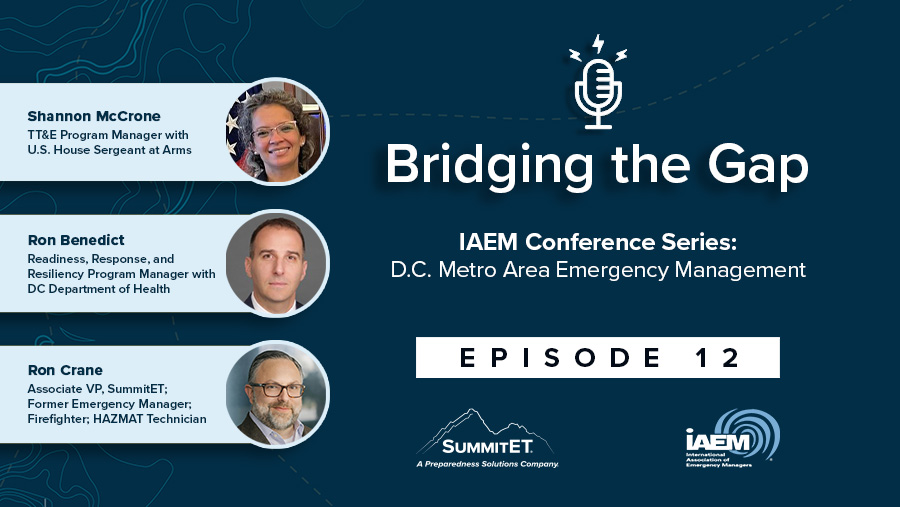
SummitET Bridging the Gap podcast IAEM series Episode 12 DC Metro Emergency Management

Bridging the Gap IAEM Series – Episode 12: D.C. Metro Area Emergency Management

In this special IAEM Conference Series episode of Bridging the Gap, Shannon McCrone, TT&E Program Manager with the U.S. House Sergeant at Arms and Ron Benedict, Readiness, Response and Resiliency Program Manager with DC Department of Health share their experiences, challenges, and ideas for improvement in emergency management in the DC metro area.

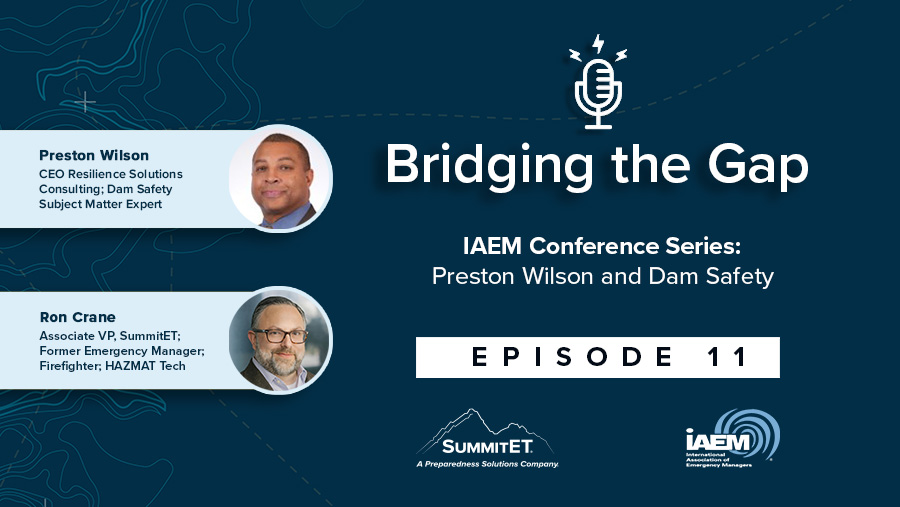
Bridging the Gap IAEM Series Podcast Episode 11 Preston Wilson and Dam Safety

Bridging the Gap IAEM Series – Episode 11: Preston Wilson and Dam Safety

In this special IAEM Conference Series episode of Bridging the Gap, host Ron Crane with SummitET is joined by Preston Wilson, CEO of Resilience Solutions Consulting. Prior to this role, Preston was the training manager for FEMA’s National Dam Safety Program, where he was responsible for developing and delivering training on emergency management and dam safety nationwide.

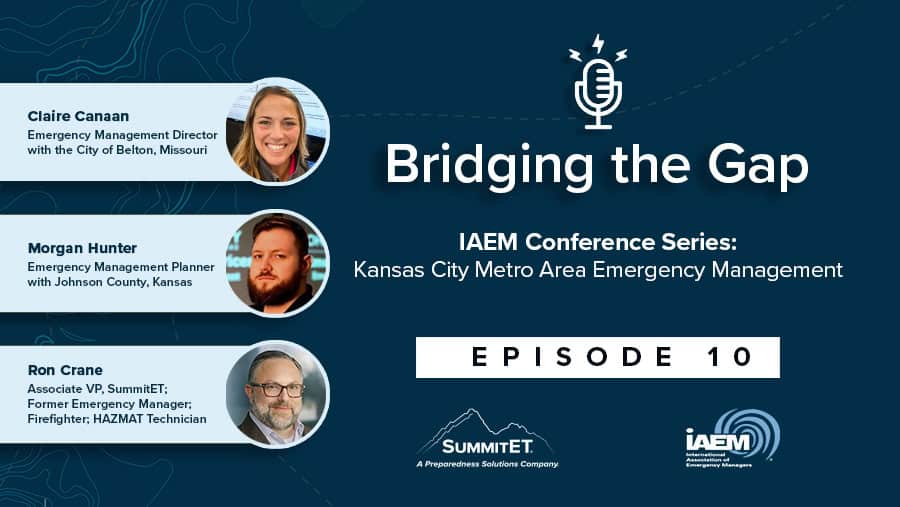
Bridging the Gap podcast, IAEM Series Episode 10: Kansas City Metro Area Emergency Management

Bridging the Gap IAEM Series – Episode 10: Kansas City Metro Area Emergency Management

In this IAEM Conference Series podcast episode of Bridging the Gap, SummitET host Ron Crane sits down with Claire Canaan and Morgan Hunter, emergency managers from the Kansas City metropolitan area. They discuss challenges in the EM field including staffing shortages and communication barriers, and the importance of embracing change and innovation.

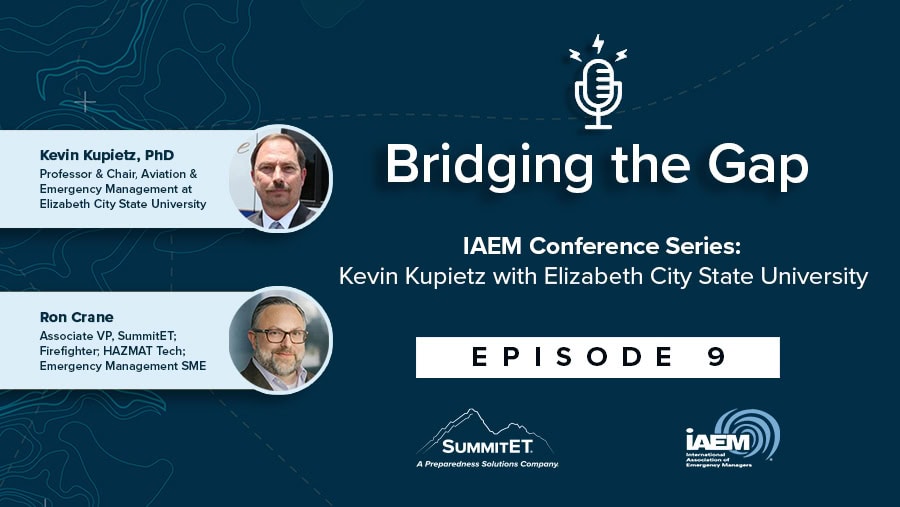
Bridging the Gap podcast graphic, IAEM Conference Series

Bridging the Gap IAEM Series – Episode 9: Kevin Kupietz with Elizabeth City State University

In this IAEM Conference Series podcast episode of Bridging the Gap, SummitET host Ron Crane discusses current challenges and opportunities in Emergency Management education with Elizabeth City State University Professor Kevin Kupietz, PhD.

Workplace Violence, NNSA & DOE

Workplace Violence, NNSA & DOE

Support for NNSA’s Workplace Violence Prevention Program 

Background 

The National Nuclear Security Administration (NNSA), a key agency within the U.S. Department of Energy (DOE), is tasked with enhancing national security, maintaining the safety and effectiveness of the U.S. nuclear weapons stockpile, reducing global threats from weapons of mass destruction, providing the U.S. Navy with safe nuclear propulsion, and responding to nuclear and radiological emergencies both domestically and internationally. Summit Exercises and Training (SummitET), a preparedness solutions company with a longstanding partnership supporting DOE/NNSA since 2014, was awarded a new contract to assist with the Workplace Violence Prevention Program (WVPP) at NNSA field offices and sites. 

Mission 

The mission of this initiative was to proactively safeguard NNSA employees by establishing, developing, and implementing a comprehensive Workplace Violence Prevention Program. The program aimed to foster a culture of safety and preparedness, ensuring all personnel were equipped to prevent and respond effectively to potential workplace violence incidents. 

Solution 

SummitET collaborated closely with the NNSA to deliver a suite of services, including specialized training, consultation, threat assessment, and intervention protocols as part of the WVPP. The partnership was designed to build organizational capacity, enhance staff awareness, and establish robust procedures for identifying and mitigating threats. According to Cliff Gordon, Assistant Manager for Safeguards & Security at the NNSA Sandia Field Office, “The training to be developed as part of this program will help NNSA take a proactive approach toward safeguarding our employees.” 

Result 

Through SummitET’s involvement, the NNSA advanced its commitment to employee safety by embedding a prevention-focused culture within its operations. The comprehensive training and protocols provided by SummitET equipped NNSA staff with the tools and knowledge necessary to recognize, prevent, and respond to workplace violence. This proactive strategy not only reduced risk but also demonstrated the agency’s dedication to the well-being of its workforce. SummitET’s ongoing support for other DOE/NNSA programs further strengthened the collaborative relationship and the overall security posture of the organization. 

Conclusion 

SummitET’s partnership with the NNSA exemplifies the importance of proactive, organization-wide initiatives in workplace violence prevention. By investing in specialized training and robust protocols, NNSA set a standard for safety and preparedness in high-security environments. As John Duda, CEO of SummitET, stated, “NNSA’s commitment to establishing and training a workplace violence prevention culture demonstrates a proactive approach to reduce risk and care for the safety of their employees.” This case highlights the critical role of collaboration and preparedness in safeguarding both personnel and national interests. 

Read about Isotope Crossroads with DOE, NNSA, FBI and ORS.

Isotope Crossroads; DOE, NNSA, ORS, FBI

Isotope Crossroads; DOE, NNSA, ORS, FBI

Strengthening Integrated Response Through Custom Training Solutions 

Background 

The Office of Radiological Security (ORS), part of the Department of Energy (DOE) and United States Department of Energy/National Nuclear Security Administration (NNSA), is dedicated to improving the security of radioactive materials throughout the country. Recognizing the risks associated with transporting radioactive sources, ORS, in partnership with the Federal Bureau of Investigation (FBI) Weapons of Mass Destruction Directorate (WMDD) Nuclear and Radiological Countermeasures Unit (NRCU), developed the Isotope Crossroads tabletop exercise (TTX) series. This initiative brings together a diverse group of stakeholders, including law enforcement, emergency responders, regulators, public health professionals, and private industry representatives, to address critical security concerns in a collaborative setting. 

Mission Need 

Securing the transport of Category 1 and 2 radioactive materials is a vital national priority. These materials, routinely shipped across the United States, are vulnerable to potential threats that could have significant consequences for public safety and security. The need for a robust, integrated response to malevolent acts targeting these shipments prompted the creation of a specialized training exercise that could strengthen agency coordination and preparedness. 

Solution 

The Isotope Crossroads TTX series offers a custom-designed approach to training, tailored to the objectives of both sponsoring agencies and the specific needs of the host jurisdiction. Each exercise features a realistic, fictional threat scenario developed to challenge participants and promote active problem-solving. The collaborative format encourages team building and open information sharing in a “no-fault” atmosphere, allowing agencies to learn from each other and refine their response strategies without fear of criticism. 

Result 

Participating agencies reported significant improvements in team cohesion and communication. The tabletop exercise fostered an environment where local, state, and federal organizations could practice joint operations, identify areas for improvement, and build trust across disciplines. Enhanced information sharing and integrated response capabilities were direct outcomes, leading to a more unified approach to radiological security during transport. 

Conclusion 

The Isotope Crossroads TTX series, led by Sandia, has made a lasting impact on the agencies involved, strengthening the overall security posture for the transport of high-activity radioactive materials. Through its collaborative and customized design, the exercise has elevated preparedness and fostered enduring partnerships that support national safety and security objectives.

Setting the Standard: Training, Strategic Guidance and Partnerships in Nuclear Emergency Readiness

Setting the Standard: Training, Strategic Guidance and Partnerships in Nuclear Emergency Readiness

How SummitET and NEST Raise the Bar for Radiological and Nuclear Incident Preparedness 

In today’s evolving threat landscape, readiness for radiological and nuclear incidents is more crucial than ever. Organizations must leverage proven training methodologies, strategic exercise planning, and actionable guidance to ensure effective preparedness and response. At SummitET, our industry experience and commitment to collaborative partnerships—especially with leaders like the Nuclear Emergency Support Team (NEST)—help set new standards for nuclear emergency readiness. 

Proven Training Methodologies for Radiological and Nuclear Response 

Effective preparedness begins with robust, scenario-based training that mirrors the complexities of real-world incidents. SummitET employs immersive exercises that challenge teams to coordinate across agencies, recognize evolving threats, and adapt to unexpected developments. Our approach incorporates best practices from counterterrorism and nuclear emergency response, ensuring that every participant gains hands-on experience in both tactical operations and consequence management. 

Exercise Planning: From Design to Debrief 

Strategic exercise planning is essential for uncovering gaps in preparedness before a crisis occurs. SummitET’s planning process includes customized drills tailored to an organization’s unique risk profile, regulatory requirements, and operational objectives. By simulating diverse scenarios—from illicit radiological material searches to large-scale consequence management—these exercises foster interagency collaboration and clarify roles, responsibilities, and communication channels. 

The power of regular, well-designed exercises cannot be overstated. They not only enhance technical proficiency but also build trust and coordination among stakeholders, supporting stronger, more resilient communities. 

Integrating Lessons Learned: Insights from Real-World Case Studies 

Continuous improvement is fueled by lessons learned from actual events. SummitET integrates insights from global radiological and nuclear incidents to refine training content and operational protocols. These case studies highlight the importance of agile response strategies and the value of continuous risk assessment in adapting to shifting geopolitical and technological landscapes. 

By sharing these lessons, you can empower your organization to avoid common pitfalls, recognize emerging threats, and foster a culture of vigilance that is vital for nuclear preparedness. 

Setting New Standards Through Collaboration: SummitET and NEST 

Collaboration is at the heart of a well-thought out approach. Our partnerships with NEST and other industry leaders enable us to offer comprehensive solutions that address every facet of nuclear emergency response. Joint initiatives combine operational expertise in search, technical operations, and consequence management, delivering actionable guidance and innovative methodologies to our clients. 

These collaborative efforts not only set new benchmarks for excellence but also create opportunities for organizations to engage in joint training and capacity-building exercises. By working together, we enhance readiness across sectors and improve the overall nuclear emergency preparedness posture. 

Take the Next Step: Enhancing Your Organization’s Nuclear Readiness 

To learn more about SummitET’s unique value proposition and how our proven methodologies can benefit your organization, schedule a consultation or download our brochure. Whether you are seeking to strengthen counterproliferation capabilities or build lasting partnerships, SummitET is ready to support your journey toward a safer, more resilient future. 

For additional information and resources contact us directly. Together, we can set the standard for radiological and nuclear incident preparedness. 

SummitET Bridging the Gap podcast IAEM series Episode 12 DC Metro Emergency Management

Bridging the Gap IAEM Series – Episode 12: D.C. Metro Area Emergency Management

In this special IAEM Conference Series episode of Bridging the Gap, Shannon McCrone, TT&E Program Manager with the U.S. House Sergeant at Arms and Ron Benedict, Readiness, Response and Resiliency Program Manager with DC Department of Health share their experiences, challenges, and ideas for improvement in emergency management in the DC metro area.

Bridging the Gap IAEM Series Podcast Episode 11 Preston Wilson and Dam Safety

Bridging the Gap IAEM Series – Episode 11: Preston Wilson and Dam Safety

In this special IAEM Conference Series episode of Bridging the Gap, host Ron Crane with SummitET is joined by Preston Wilson, CEO of Resilience Solutions Consulting. Prior to this role, Preston was the training manager for FEMA’s National Dam Safety Program, where he was responsible for developing and delivering training on emergency management and dam safety nationwide.

Bridging the Gap podcast, IAEM Series Episode 10: Kansas City Metro Area Emergency Management

Bridging the Gap IAEM Series – Episode 10: Kansas City Metro Area Emergency Management

In this IAEM Conference Series podcast episode of Bridging the Gap, SummitET host Ron Crane sits down with Claire Canaan and Morgan Hunter, emergency managers from the Kansas City metropolitan area. They discuss challenges in the EM field including staffing shortages and communication barriers, and the importance of embracing change and innovation.

Bridging the Gap podcast graphic, IAEM Conference Series

Bridging the Gap IAEM Series – Episode 9: Kevin Kupietz with Elizabeth City State University

In this IAEM Conference Series podcast episode of Bridging the Gap, SummitET host Ron Crane discusses current challenges and opportunities in Emergency Management education with Elizabeth City State University Professor Kevin Kupietz, PhD.