
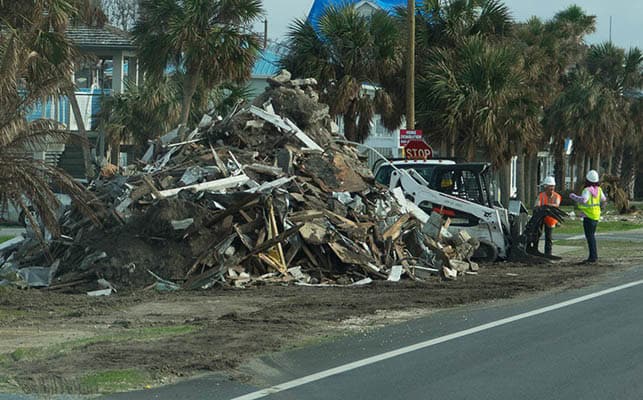
FEMA Crisis Management Coordination and Domestic Support Team

FEMA Crisis Management Coordination and Domestic Support Team

SummitET and Obsidian Solutions Group Support FEMA’s CMCU and DEST Missions

Background

The Federal Emergency Management Agency (FEMA) plays a pivotal role in safeguarding the nation by coordinating crisis management efforts and providing rapid emergency support. Within FEMA, the Crisis Management Coordination Unit (CMCU) and the Domestic Emergency Support Team (DEST) are essential components tasked with planning, coordinating, and executing national responses to complex emergencies. Recognizing the critical importance of expertly managed crisis operations, FEMA sought specialized support to further strengthen its planning and response capabilities.

Mission

FEMA required subject matter expert support for its Crisis Management Coordination Unit (CMCU) and Domestic Emergency Support Team (DEST). The goal was to enhance the effectiveness and efficiency of its national policy planning, exercise development, and overall program management to better serve the nation during emergencies.

Solution

SummitET partnered with the prime contractor, Obsidian Solutions Group (OSG), to deliver comprehensive support tailored to FEMA’s needs. Leveraging its extensive past performance, SummitET contributed by identifying, recruiting, and hiring highly qualified SME personnel. This collaboration ensured that FEMA’s CMCU and DEST were equipped with the expertise necessary to address evolving challenges and fulfill their critical missions.

Result

Through this strategic partnership, SummitET supported OSG in securing a successful bid to provide exercise planning, national policy planning, and program management support for FEMA’s CMCU and DEST missions. The deployment of qualified SMEs enabled FEMA to enhance its operational readiness, ensuring seamless coordination and execution of emergency support initiatives.

Conclusion

The collaboration between SummitET and Obsidian Solutions Group exemplifies the power of strategic partnerships in achieving mission-critical outcomes. By bringing together specialized expertise and robust project management, the team delivered measurable value to FEMA—strengthening national crisis preparedness and reinforcing FEMA’s commitment to protecting communities across the United States.

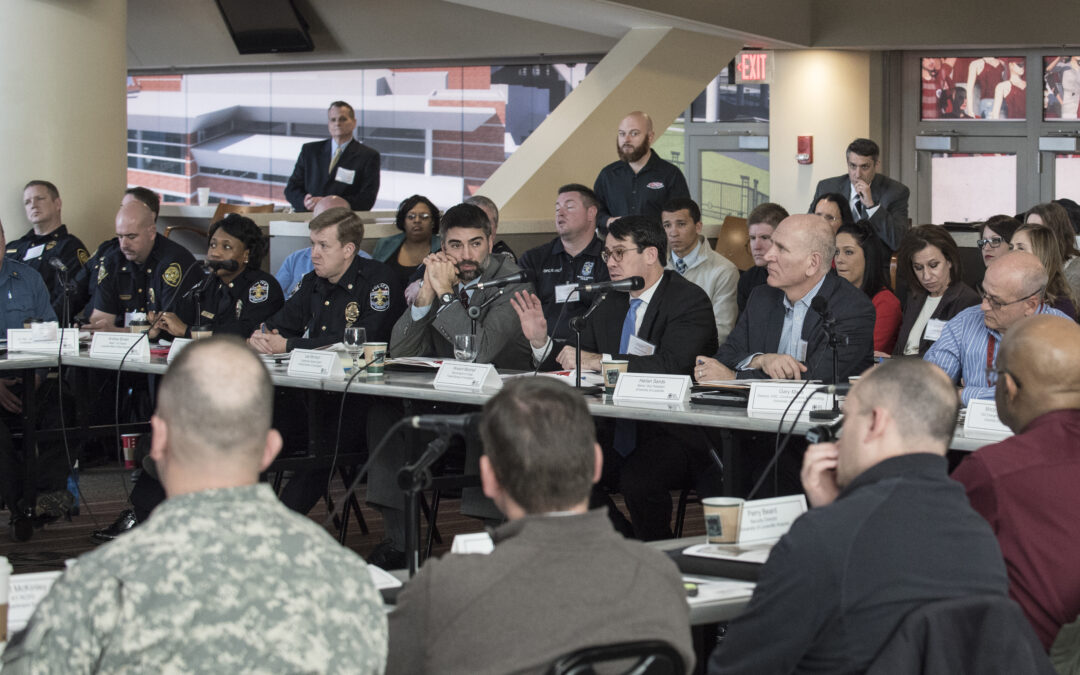
Defense Threat Reduction Agency (DTRA) and MINES

Defense Threat Reduction Agency (DTRA) and MINES

Enabling Strategic Preparedness through Outreach, Training, and Expertise

Background 

The Defense Threat Reduction Agency (DTRA) plays a critical role in safeguarding national security by countering threats from nuclear, chemical, and biological hazards. To further its mission, DTRA sought to enhance readiness through the adoption of the Military Impact of Nuclear Events Software (MINES), a wargaming tool designed to assess and visualize nuclear event impacts. This initiative aimed to strengthen strategic planning and operational effectiveness across the Department of Defense (DoD) and other federal agencies.

Mission

DTRA’s objective was to conduct comprehensive outreach and training for the use of MINES, ensuring its effective integration in wargaming and operational scenarios. The agency’s mission centered on building user proficiency, promoting MINES adoption, and leveraging its analytical capabilities to support decision-making across military and federal stakeholders.

Solution

SummitET subject matter experts brought their deep chemical, biological, radiological, and nuclear (CBRN) insight to the project. Their involvement supported the development, training, and outreach activities for MINES within DoD and other federal agencies. SummitET’s expertise guided the software’s evolution, contributed to training materials, and ensured the tool’s alignment with operational needs.

Result

  • A comprehensive nuclear effects paper was developed and delivered, offering critical analysis and guidance for MINES users.
  • SummitET created a MINES training course, facilitating user education and supporting ongoing software development.
  • Ongoing support was provided for multiple evolutions of the Fort Leonard Wood Maneuver Support Center of Excellence (MSCOE) Chemical Captain’s Course Tabletop Exercise (TTX), strengthening training and operational readiness.

Conclusion

The collaboration between DTRA and SummitET led to significant advancements in nuclear event preparedness. Through targeted outreach, expert-led training, and continual development of the MINES software, DTRA enhanced its capabilities across the DoD and federal agencies. This partnership underscores the value of combining operational expertise with innovative tools, ensuring ongoing preparedness for emerging threats and supporting mission success.

Workplace Violence, NNSA & DOE

Workplace Violence, NNSA & DOE

Support for NNSA’s Workplace Violence Prevention Program 

Background 

The National Nuclear Security Administration (NNSA), a key agency within the U.S. Department of Energy (DOE), is tasked with enhancing national security, maintaining the safety and effectiveness of the U.S. nuclear weapons stockpile, reducing global threats from weapons of mass destruction, providing the U.S. Navy with safe nuclear propulsion, and responding to nuclear and radiological emergencies both domestically and internationally. Summit Exercises and Training (SummitET), a preparedness solutions company with a longstanding partnership supporting DOE/NNSA since 2014, was awarded a new contract to assist with the Workplace Violence Prevention Program (WVPP) at NNSA field offices and sites. 

Mission 

The mission of this initiative was to proactively safeguard NNSA employees by establishing, developing, and implementing a comprehensive Workplace Violence Prevention Program. The program aimed to foster a culture of safety and preparedness, ensuring all personnel were equipped to prevent and respond effectively to potential workplace violence incidents. 

Solution 

SummitET collaborated closely with the NNSA to deliver a suite of services, including specialized training, consultation, threat assessment, and intervention protocols as part of the WVPP. The partnership was designed to build organizational capacity, enhance staff awareness, and establish robust procedures for identifying and mitigating threats. According to Cliff Gordon, Assistant Manager for Safeguards & Security at the NNSA Sandia Field Office, “The training to be developed as part of this program will help NNSA take a proactive approach toward safeguarding our employees.” 

Result 

Through SummitET’s involvement, the NNSA advanced its commitment to employee safety by embedding a prevention-focused culture within its operations. The comprehensive training and protocols provided by SummitET equipped NNSA staff with the tools and knowledge necessary to recognize, prevent, and respond to workplace violence. This proactive strategy not only reduced risk but also demonstrated the agency’s dedication to the well-being of its workforce. SummitET’s ongoing support for other DOE/NNSA programs further strengthened the collaborative relationship and the overall security posture of the organization. 

Conclusion 

SummitET’s partnership with the NNSA exemplifies the importance of proactive, organization-wide initiatives in workplace violence prevention. By investing in specialized training and robust protocols, NNSA set a standard for safety and preparedness in high-security environments. As John Duda, CEO of SummitET, stated, “NNSA’s commitment to establishing and training a workplace violence prevention culture demonstrates a proactive approach to reduce risk and care for the safety of their employees.” This case highlights the critical role of collaboration and preparedness in safeguarding both personnel and national interests. 

Read about Isotope Crossroads with DOE, NNSA, FBI and ORS.